
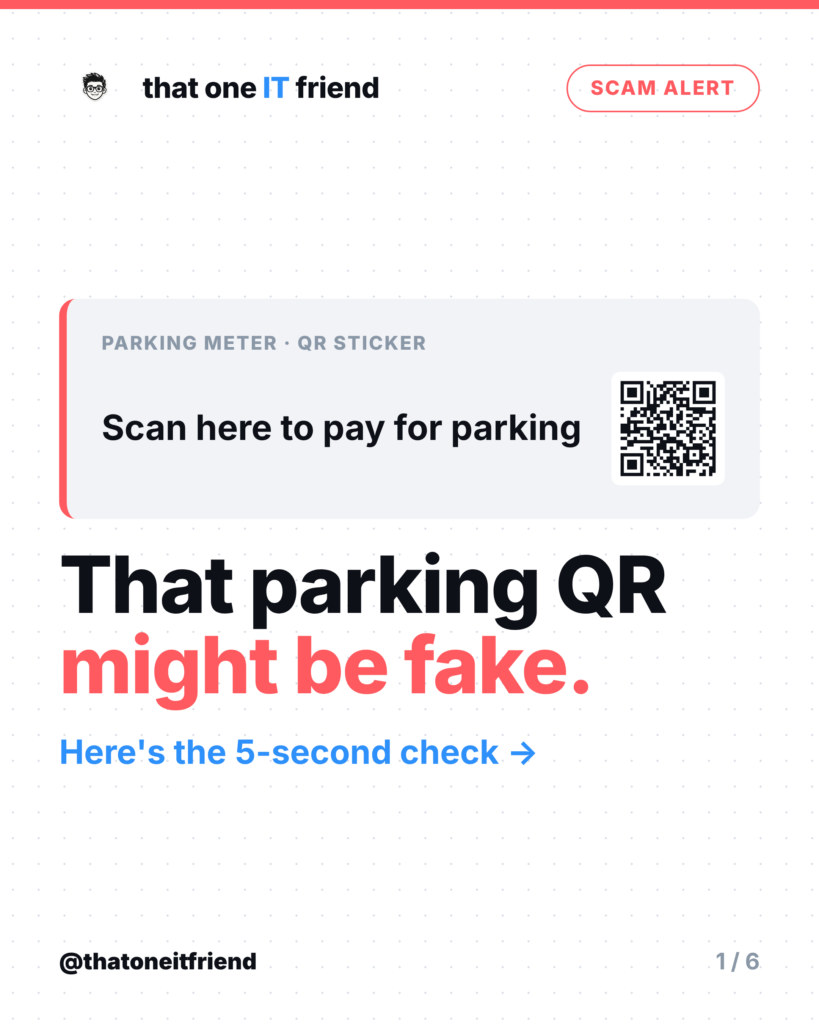
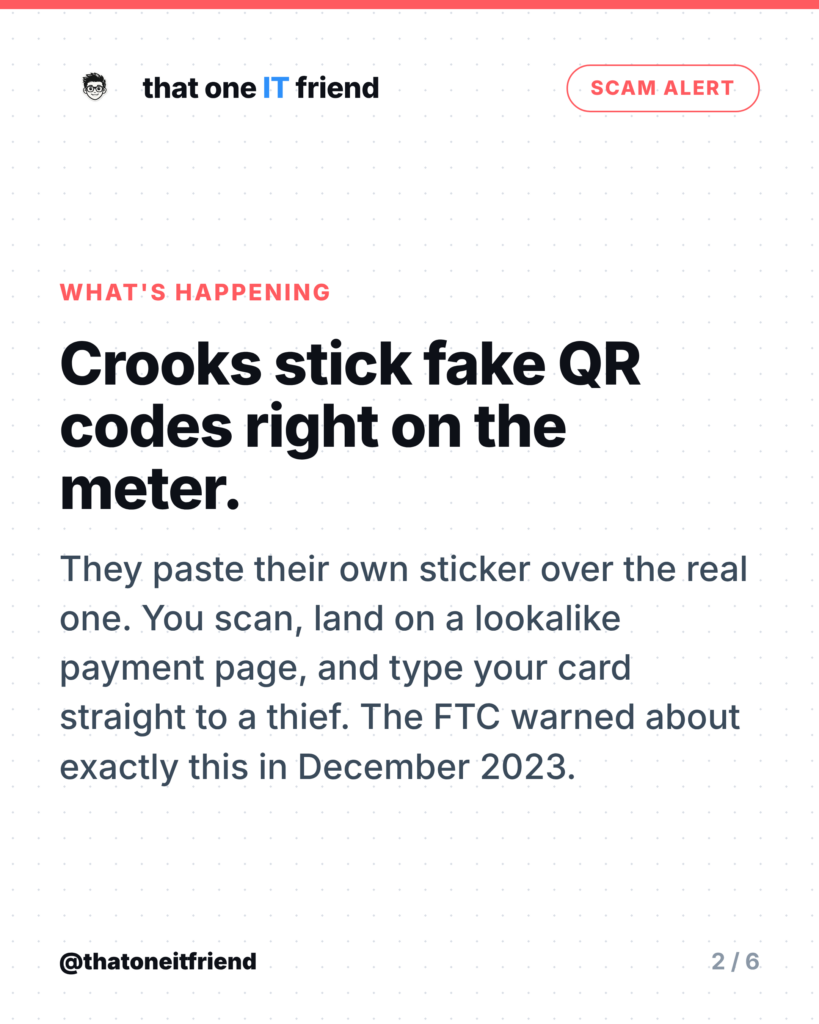
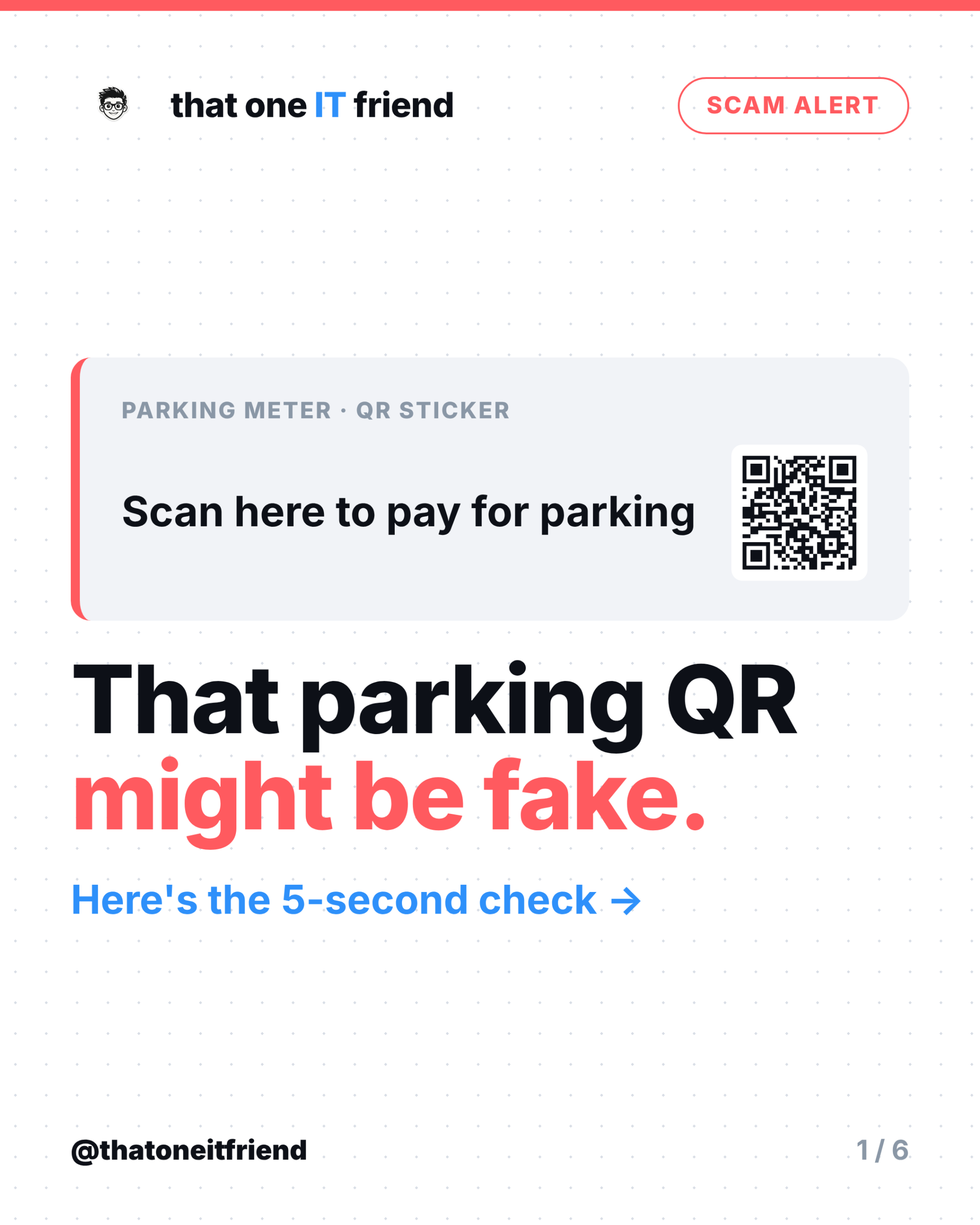
Short answer: if you found the QR code in public, don’t pay through it. Scammers print their own sticker, slap it over the real one on a parking meter, and collect your card details on a page that looks exactly like your city’s. The FTC warned about this specific trick in December 2023, and cities are still peeling stickers off meters. Spotting one takes about five seconds once you know what you’re looking at.
What the fake parking QR code scam looks like
You pull into a metered spot, see a sticker that says Scan here to pay for parking, and scan it. The page that loads has the right city name, sometimes the right logo, and a friendly form asking for your card number. You pay. The meter never registers it. A thief now has your card, and you get a parking ticket, which is how a lot of people find out.
The FTC’s alert puts it plainly. It describes “scammers covering up QR codes on parking meters with a QR code of their own.” This isn’t theoretical: San Antonio, Redondo Beach, Fort Lauderdale, Orlando, New York and Asheville have all pulled fake stickers off public meters. Orlando found roughly 200 of them in a single sweep in June 2025, and the real ParkMobile code was printed on the meter in green the whole time.
Why a QR code is the perfect hiding place
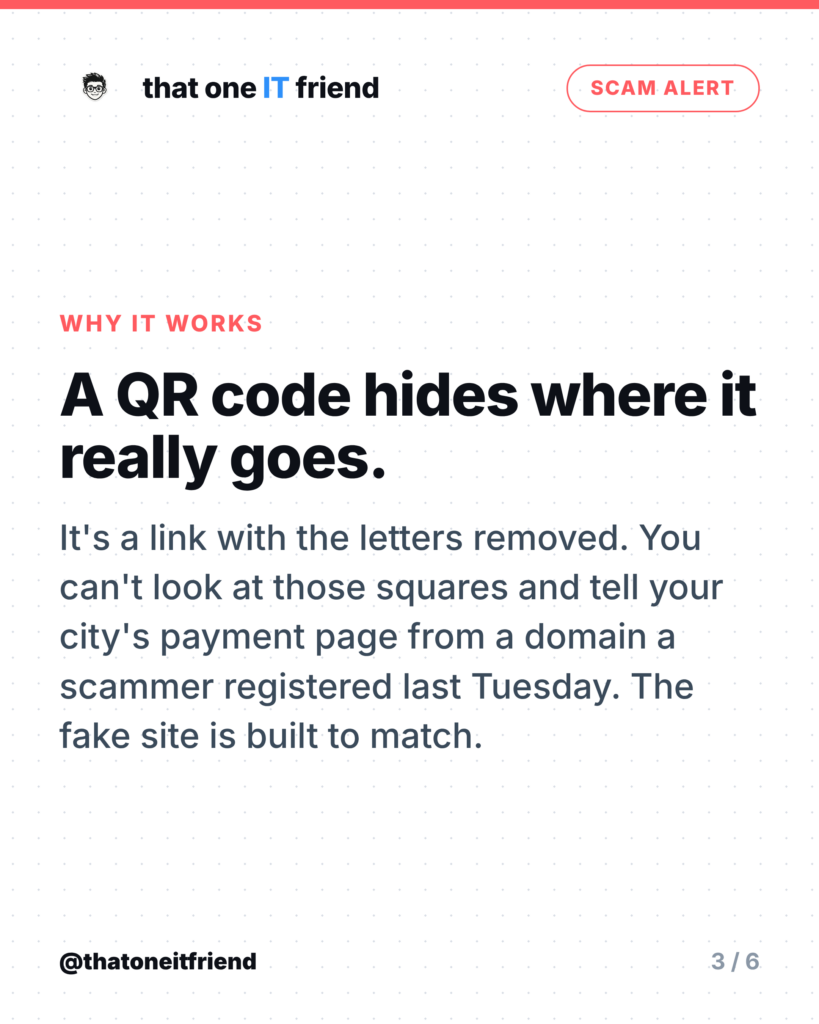
A web address you can read gives you a chance to notice something’s off. A QR code is that same link with the letters stripped out. You cannot look at a grid of black squares and tell whether it points to your city’s payment system or to a domain someone registered last week. Add a sticker that matches the meter’s colours and there’s nothing left for your instincts to catch.
One thing worth clearing up, because it gets exaggerated constantly: scanning a code does not by itself empty your bank account. Your phone reads the code, shows you a link, and waits. The money only moves when you type your card into the page. That’s the good news, because it means the entire scam depends on a step that is still yours to refuse.
The five-second check
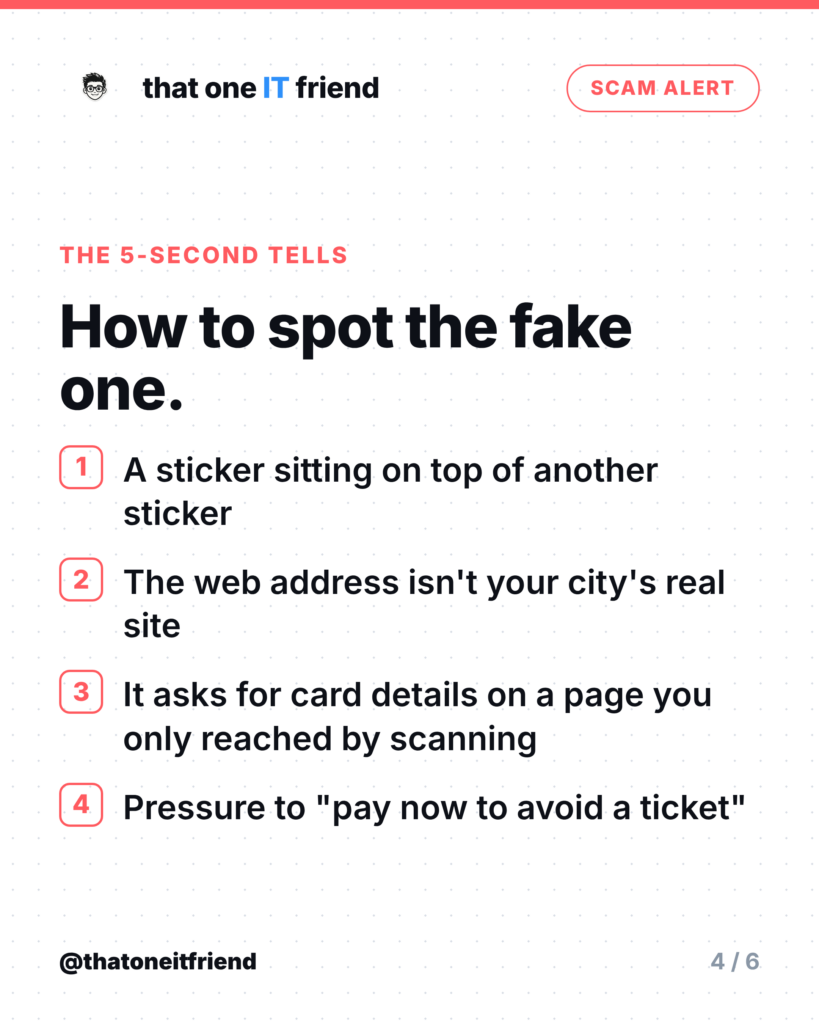
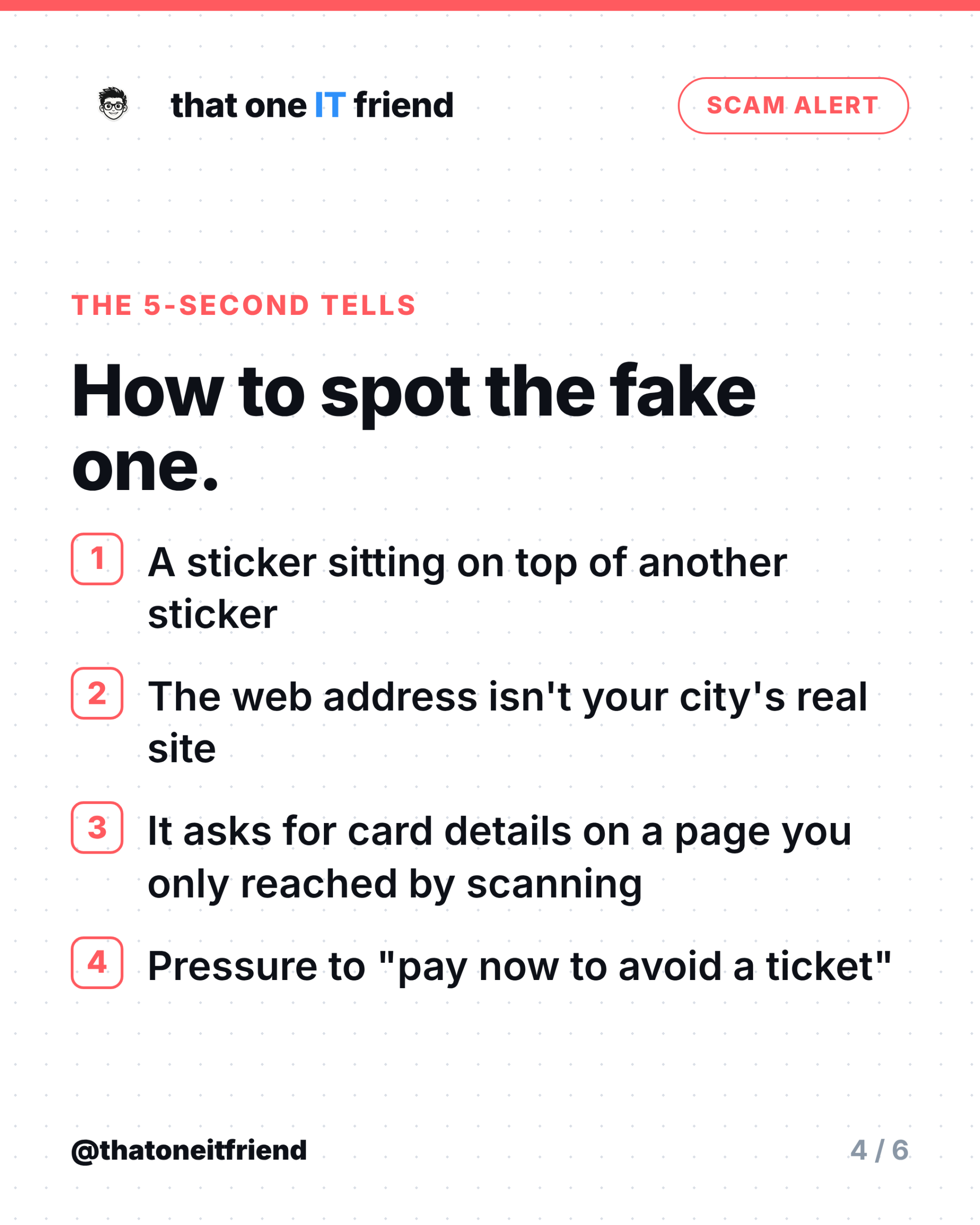
- Look for a sticker on a sticker. Peel-and-stick fraud leaves an edge, a bubble, or a colour that’s slightly off.
- Read the address before you tap. Your city’s site doesn’t end in .online or .info, and it isn’t a string of random words.
- Ask why it wants a card on this page. Official parking usually takes payment at the meter or in an app your city names on its own website.
- Notice the pressure. “Pay now to avoid a ticket” is a scammer’s line. Cities send you a notice in the mail.
Pay the boring way instead
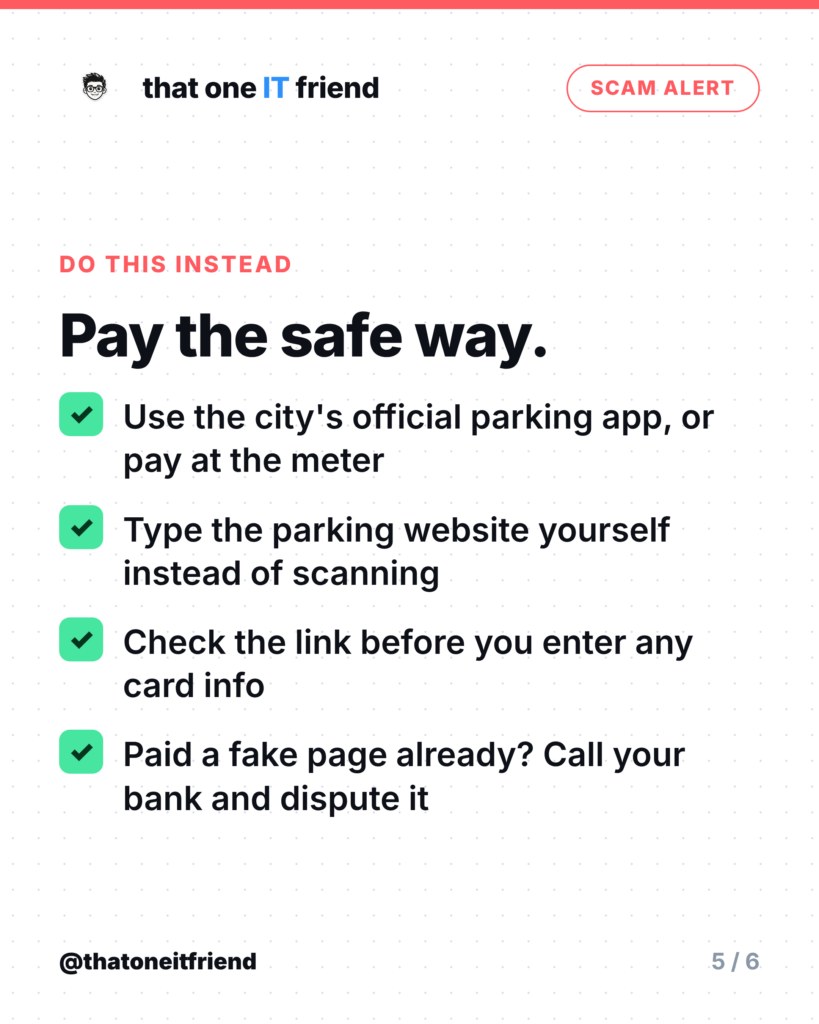
- Pay at the meter, or open the app your city names on its official site. Type the address yourself.
- If the meter only takes an app you’ve never heard of, walk to the next block or search for the city’s parking page rather than scanning.
- If you already paid a page you reached by scanning, call your card issuer now and dispute the charge. Credit cards give you a written federal dispute process under the Fair Credit Billing Act; debit cards give you far less.
The one rule to remember
Don’t pay through a QR code you found in public. Not on a meter, not on a flyer, not on a card left under your wiper. Choosing the payment route yourself costs two seconds and kills the whole scam, along with a dozen others built the same way.
Frequently asked questions
Can scanning a QR code hack my phone?
Not on its own. The code hands your phone a link, and your phone waits for you to tap it. The risk is the page it opens and what you type into that page, not the scan itself.
How can I tell if a parking QR code is real?
Assume you can’t. That’s the whole point of the format. Instead of judging the code, choose the payment route yourself: pay at the meter, or open the app your city names on its official website.
What should I do if I already paid a fake page?
Call your bank or card issuer right away, report the charge, and ask for a replacement card. Then report it at reportfraud.ftc.gov. If you paid by credit card, you also have a written billing-error dispute route with your issuer.
Are QR codes on restaurant menus risky too?
Much less so, because you’re not entering card details. Be careful with any code that leads to a payment form, and with codes on stickers in public places where anyone could have put them there.
Every week I break down one scam to dodge, one genuinely useful AI trick, and one 30-second tech fix, in plain English. Follow @thatoneitfriend on Instagram, TikTok, and Facebook, or get the weekly rundown by email at thatoneitfriend.com.