

The trick: give a chatbot the facts and let it write the email, then check every detail before you send it. Complaint emails fail for a boring reason. They’re long, they’re emotional, and they don’t say what you actually want. AI is genuinely good at fixing exactly that, as long as you supply the facts and it supplies nothing but the wording.
Why most complaint emails go nowhere
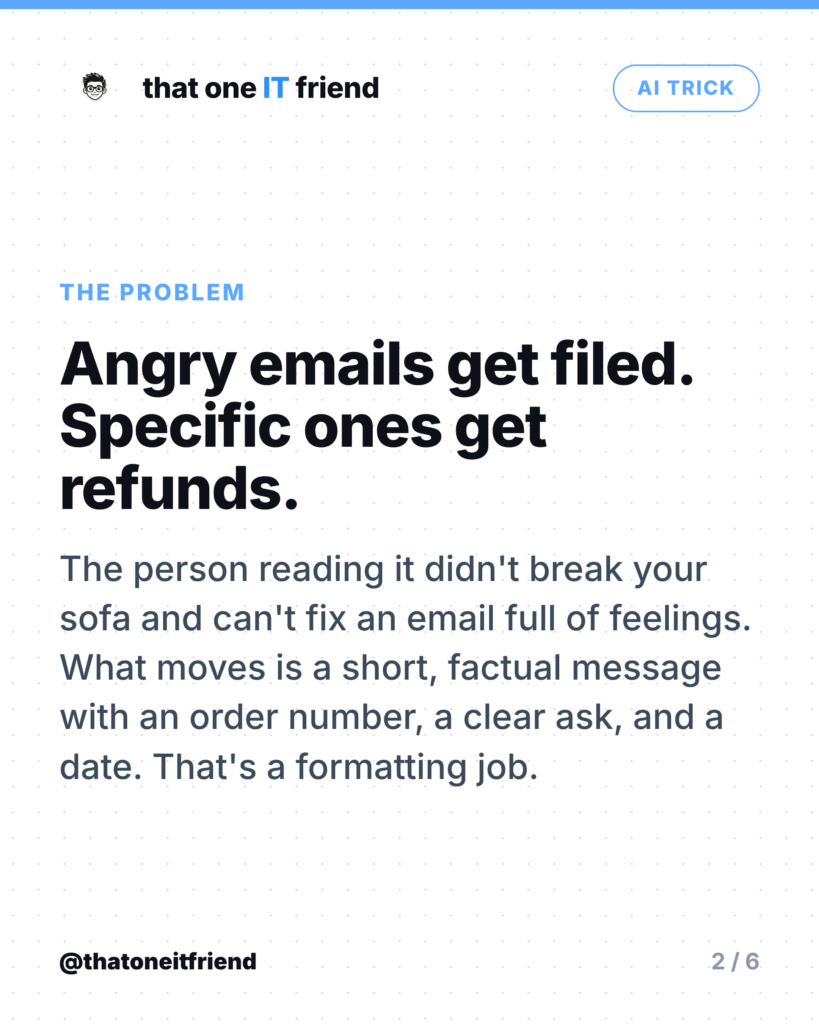
The FTC has published a sample complaint letter for years, and its advice on tone is the part people skip: “Be polite and reasonable in your letter. The person who will read it probably didn’t cause the problem.” Whoever opens your message is a support agent with a queue and a script. Give them a wall of frustration and they’ll send back a template. Give them an order number, a date, and a specific request and they can act on it.
The facts to collect first
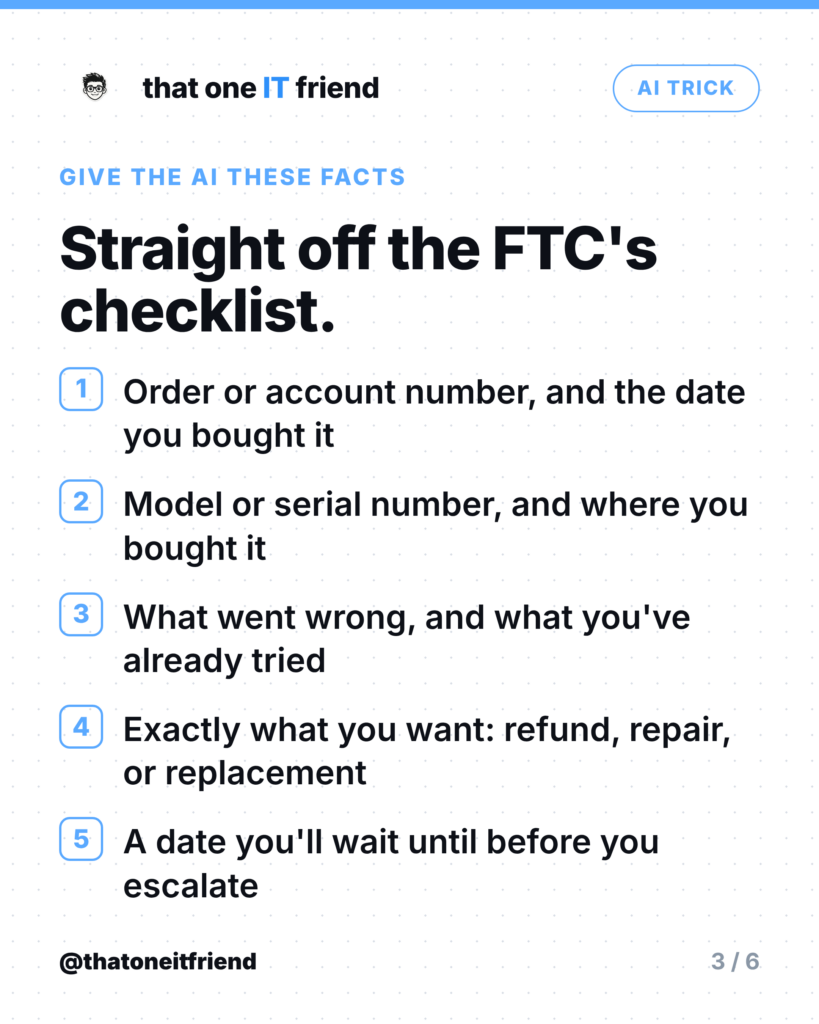
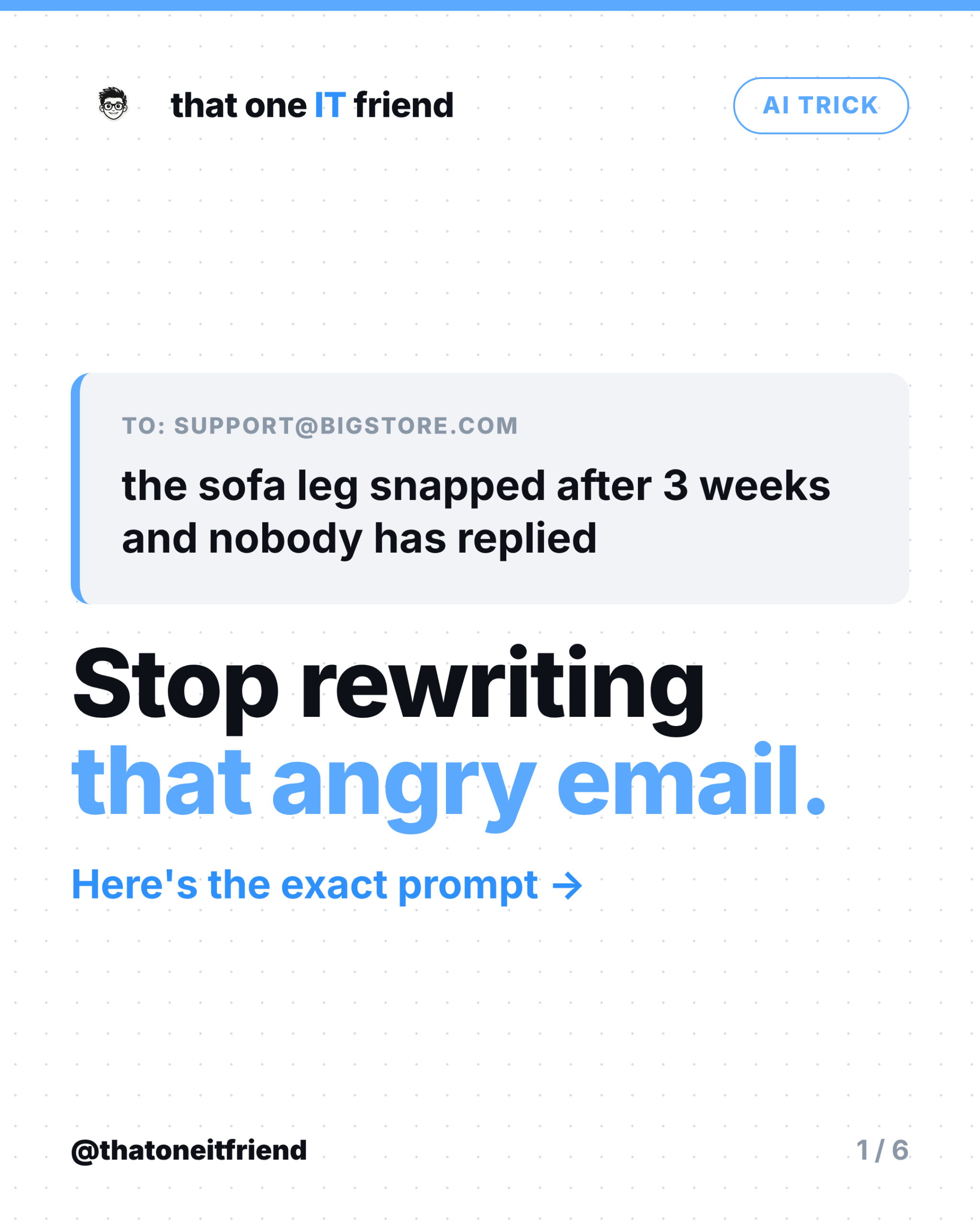
This is the part only you can do, and it’s where the email actually gets its power. The FTC’s own structure asks for four things: the basics, your story, how you want it resolved, and what you’ll do next. In practice that means digging out:
- Your order or account number, and the related transaction number if there is one.
- The product name plus its model or serial number.
- The date and place you bought it, or had it repaired.
- A short history of what’s gone wrong and what you’ve already tried.
- The resolution you want, named out loud: refund, repair, exchange, or store credit.
- A date you’ll wait until. The FTC’s template says it straight: “I will wait until [give a date] before I contact a consumer protection agency or get other help.”
The prompt
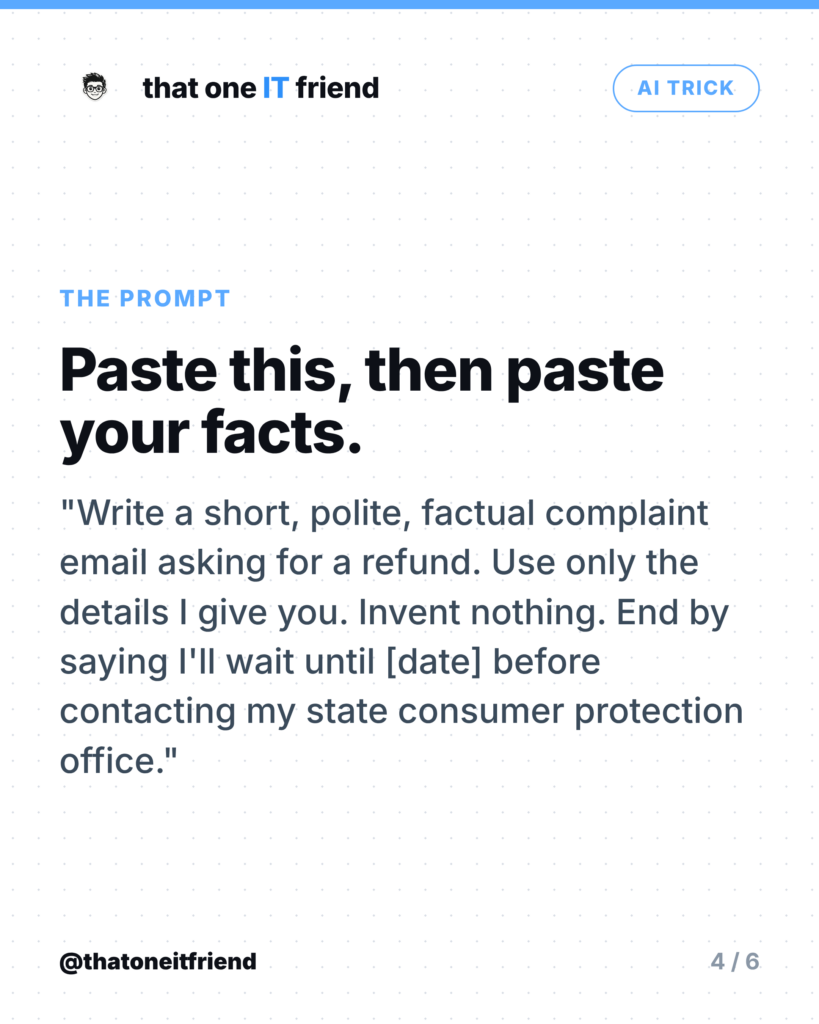
Open ChatGPT, Claude, Gemini, or Copilot and paste this, followed by your facts:
Write a short, polite, factual complaint email asking for a refund. Use only the details I give you below. Do not invent any details and do not cite any laws or policies. End by saying I’ll wait until [date] before contacting my state consumer protection office. Keep it under 200 words.
Then paste your notes, however messy. “Bought sofa Oct 1, model 25811, $650, delivered Oct 10, leg broke Oct 30, filed two web forms, no reply, want full refund and free pickup.” That’s enough. What comes back will be tighter and calmer than anything you’d write while annoyed.
The part that matters: check it before you send
AI will confidently invent a law that doesn’t exist. That’s not a hypothetical risk. In 2023 a federal court in New York sanctioned two lawyers $5,000 after they filed a brief containing, in the court’s words, “non-existent judicial opinions with fake quotes and citations created by” ChatGPT. If a chatbot will do that to a judge, it will absolutely do it to your sofa complaint. A fabricated statute aimed at a company’s legal team destroys the one thing your email has going for it, which is credibility.
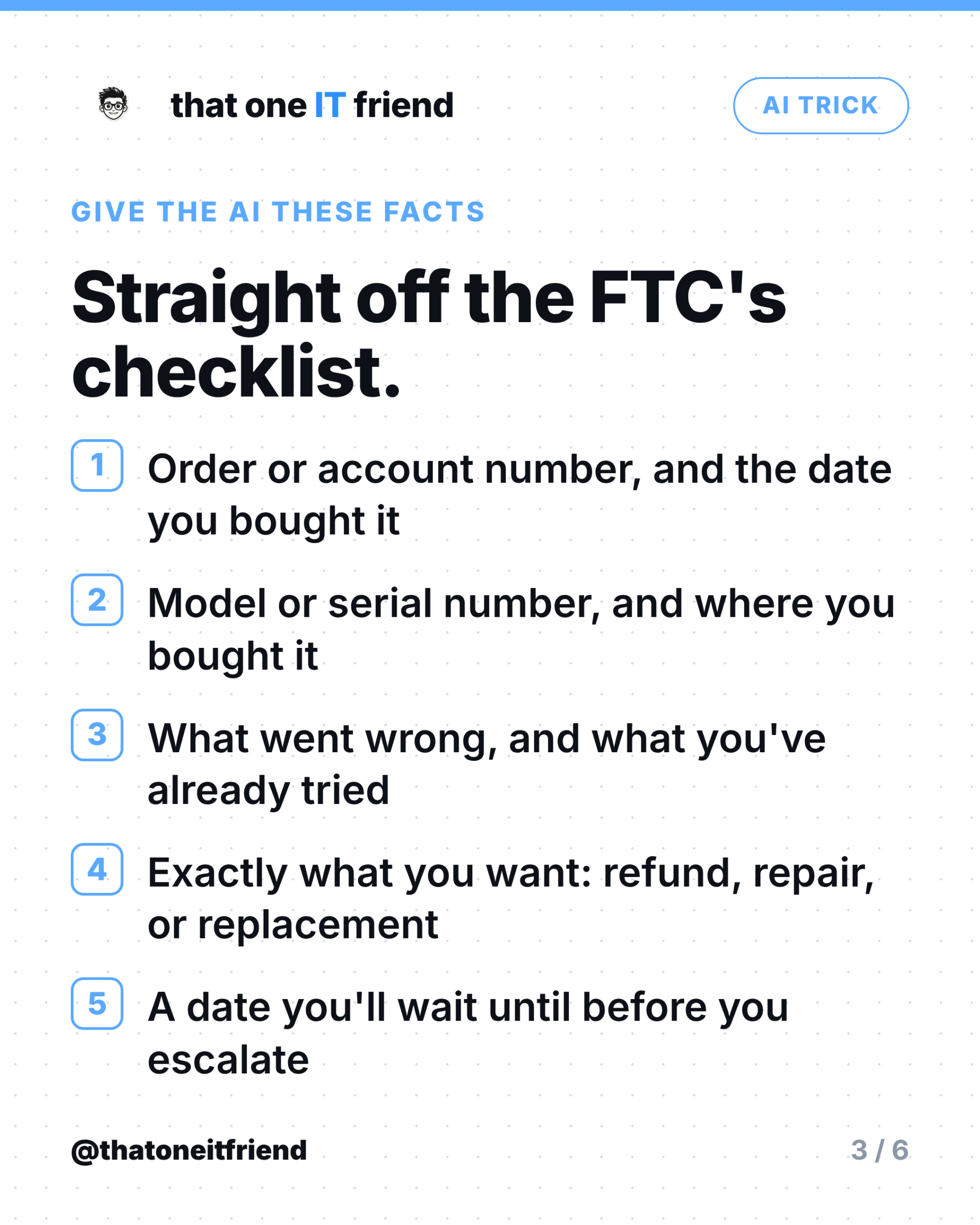
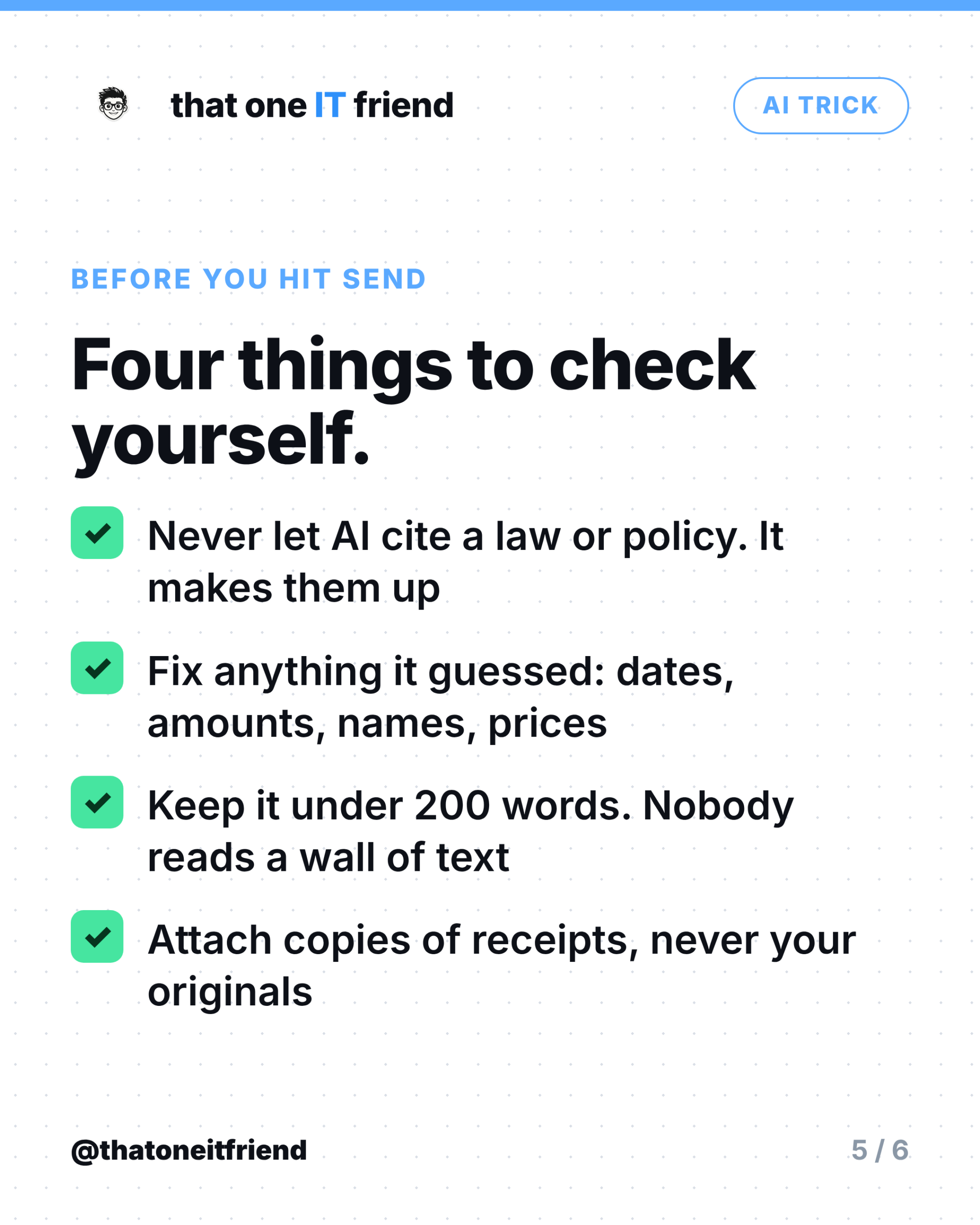
So read it line by line. Fix any date, amount, model number, or name it smoothed over. Delete any sentence that starts sounding like a lawyer. And send copies of your receipts, not originals. The FTC says this twice on the same page, which tells you how often people get it wrong.
If they say no
Escalate in this order. Ask for a supervisor first, in writing. Then, if you paid by credit card and the goods were defective or never arrived, contact your card issuer about a billing-error dispute; the FTC notes the letter has to reach the issuer within 60 days of the first statement showing the error, sent to the billing inquiries address, not the payment address. For anything involving a bank, card, loan, or credit report, the CFPB complaint portal is the route that actually produces a reply: companies generally respond in 15 days. For a broken sofa, a gym membership, or a contractor, it’s your state attorney general or local consumer protection office.
Worth knowing so you don’t waste effort: the FTC doesn’t resolve individual complaints. Reporting to it helps build cases. It won’t get your $650 back.
The one rule to remember
AI organizes your facts. It must never supply them. Every element that makes a complaint email work is something only you have: the order number, the dates, the receipt, the specific thing you want. The chatbot’s job is to arrange them politely and stop you sending the version you’d regret.

Frequently asked questions
Does a company have to respond to my complaint email?
No federal law requires a business to reply to a complaint email, or sets a deadline for one. That’s why the FTC’s template has you pick the date instead. Real deadlines exist in specific channels, like the 30 and 90 day limits on your card issuer during a billing dispute.
Should I quote consumer law in the email?
Generally no, and never a citation an AI gave you. Naming a statute at a retailer’s support inbox does nothing, because most of those laws bind your card issuer or bank rather than the merchant. What has effect is the right channel, in writing, inside the deadline.
Which chatbot is best for this?
Any of them. ChatGPT, Claude, Gemini and Copilot all handle a short business email well. The quality comes from the facts you paste in, not the model you pick.
Is it dishonest to have AI write it?
No. You’re supplying every fact and every request; it’s arranging your words. It’s the same as using a template, which the FTC publishes and encourages.
What if I paid by debit card?
You have less protection. The federal billing-error process covers credit cards and revolving credit. Debit card rules mainly cover unauthorized transactions, not a merchant refusing a refund, so anything you get back may depend on your bank’s own policy.
Every week I break down one scam to dodge, one genuinely useful AI trick, and one 30-second tech fix, in plain English. Follow @thatoneitfriend on Instagram, TikTok, and Facebook, or get the weekly rundown by email at thatoneitfriend.com.