
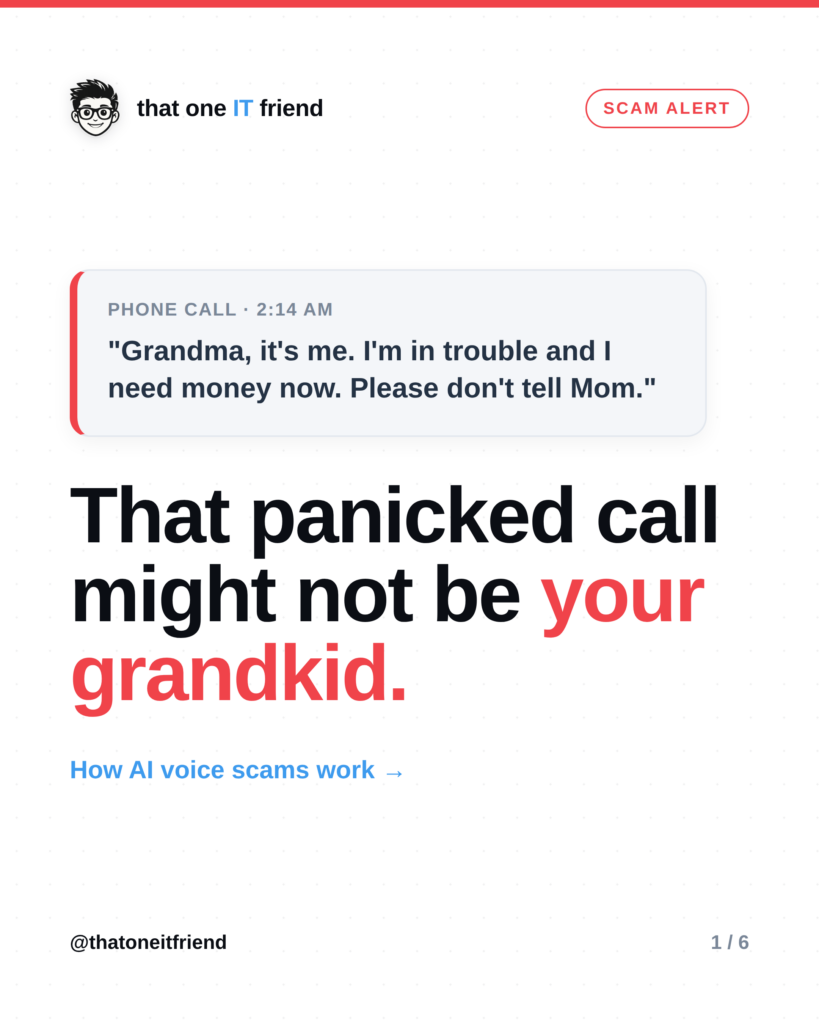
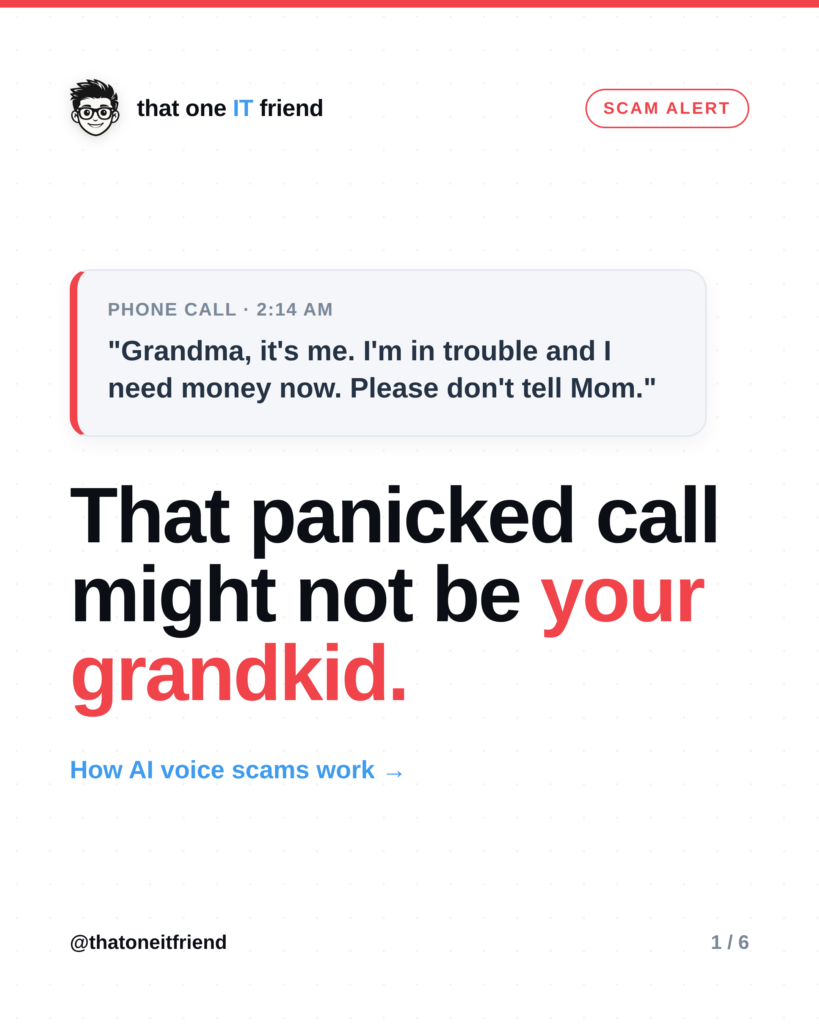
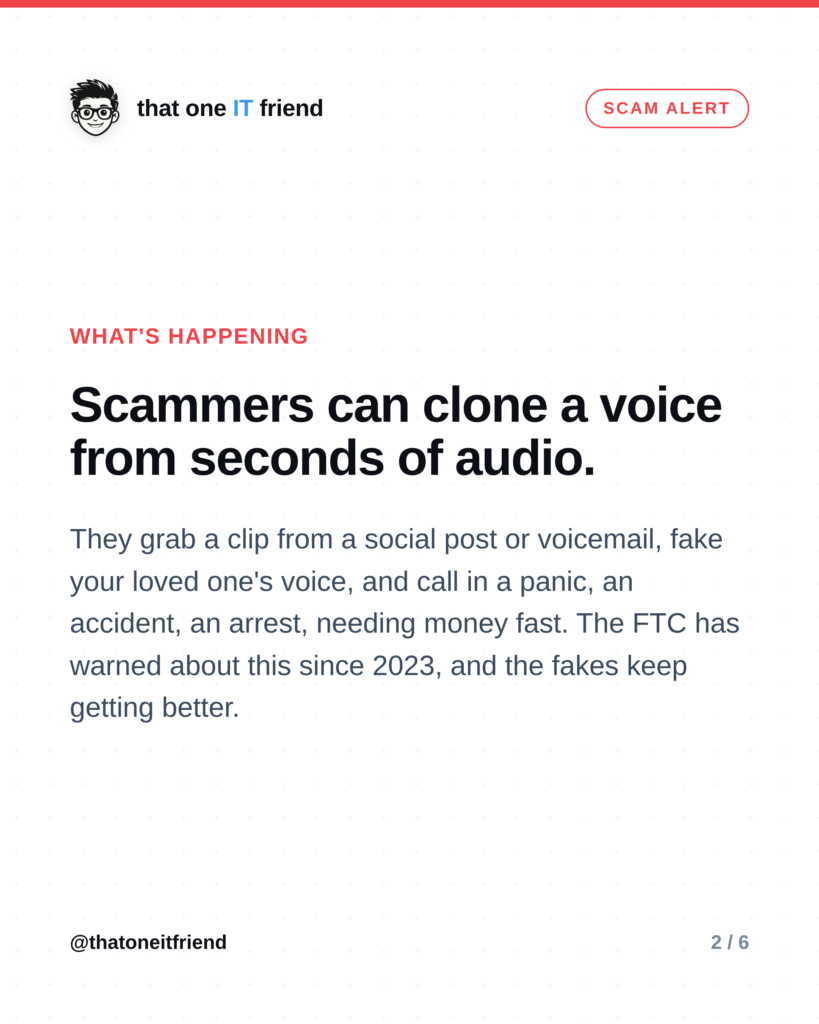
Short version: that frantic call from a loved one in trouble might be a scammer using AI to fake their voice. The technology can now copy someone’s voice from a few seconds of audio, and thieves use it to call in a panic, an accident, an arrest, a stranded trip, and beg you to send money fast. The FTC has warned about this since 2023, and the fakes keep getting better. Here’s how to spot it and the one move that beats it.
How the AI voice scam works
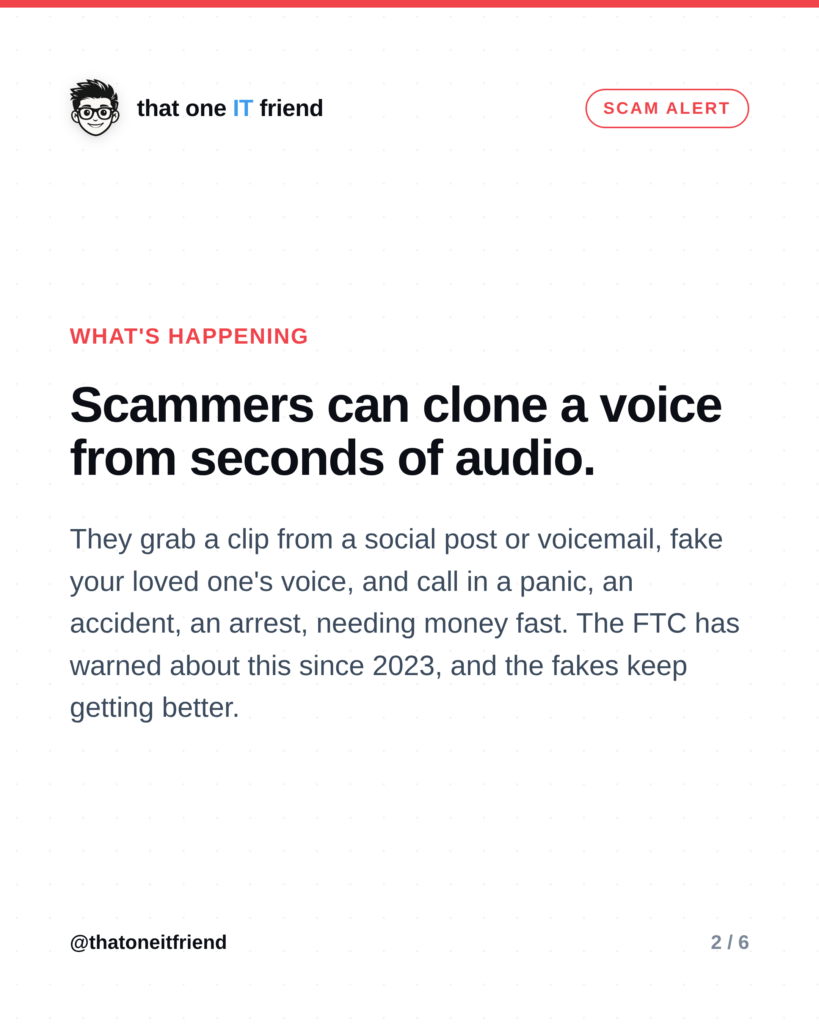
 Scammers grab a short clip of someone’s voice, from a social media video, a voicemail greeting, a posted Reel, and feed it to a voice-cloning tool. Then they call you, or a parent or grandparent, sounding just like your kid, and spin an emergency: “I’ve been in an accident,” “I’m in jail and need bail,” “don’t tell Mom.” The goal is to get you scared and moving before you stop to think.
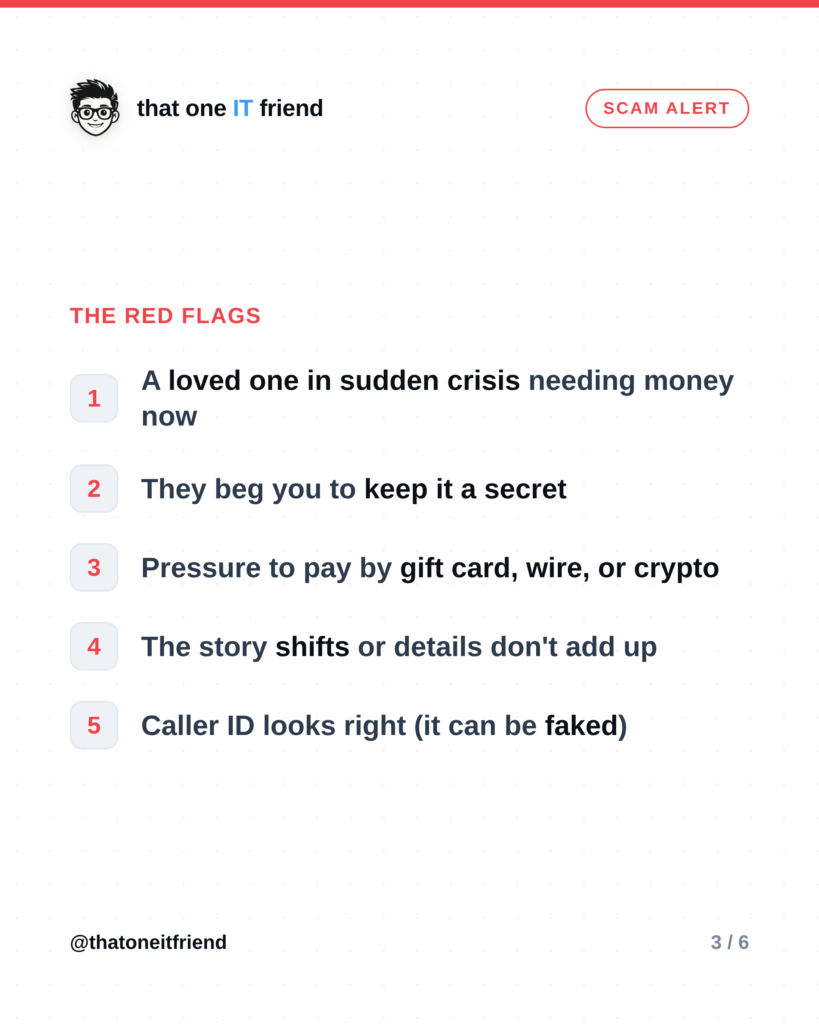
The red flags

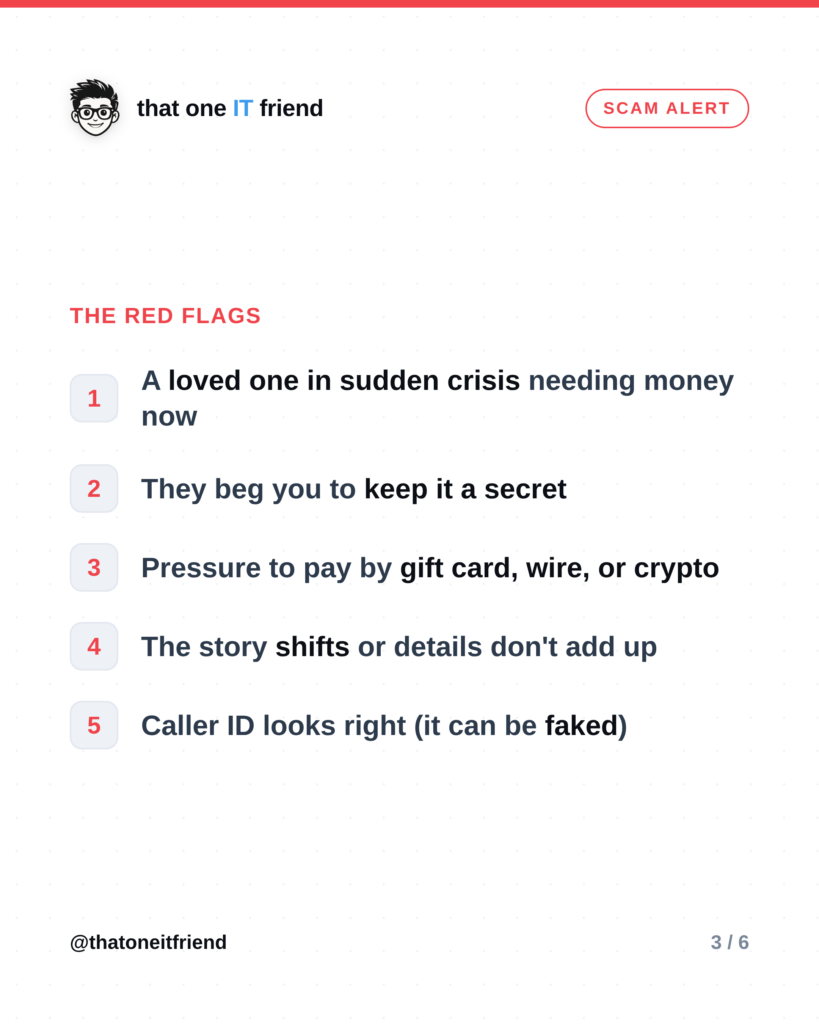
- A loved one in sudden crisis who needs money right now.
- They beg you to keep it a secret from the rest of the family.
- Pressure to pay by gift card, wire transfer, or crypto, the untraceable options.
- The story shifts or details don’t quite add up when you ask questions.
- Caller ID looks right, which means nothing, it can be faked.
What to do if you get one of these calls

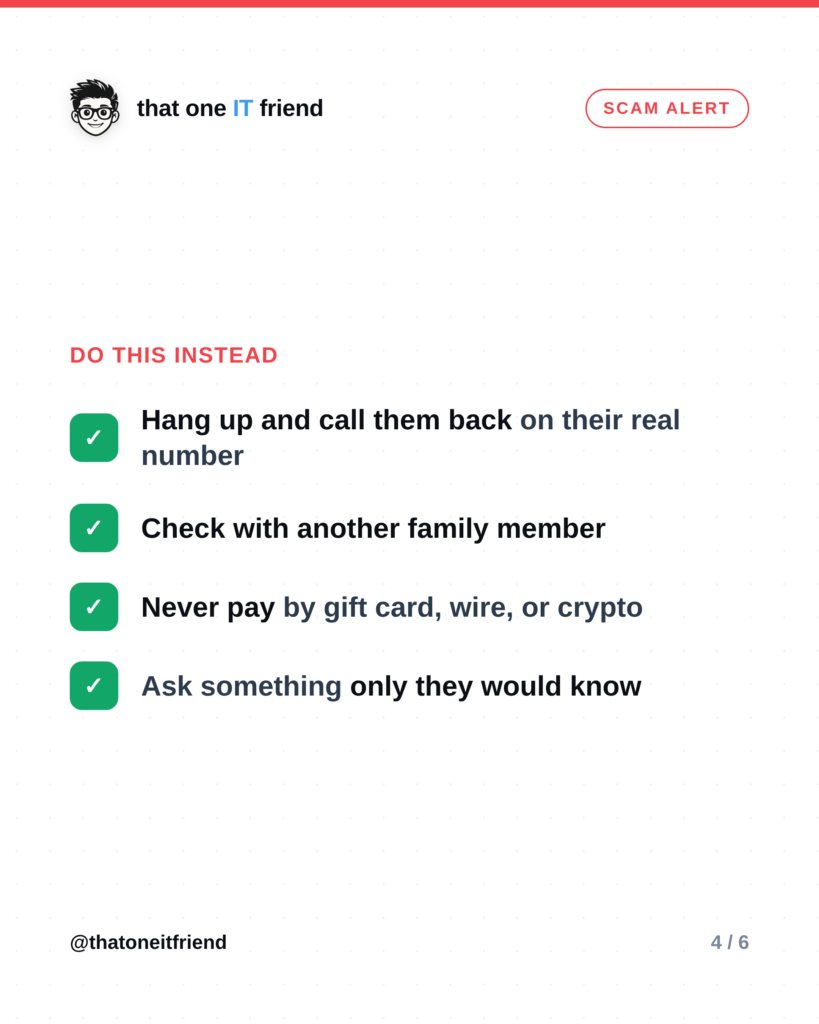
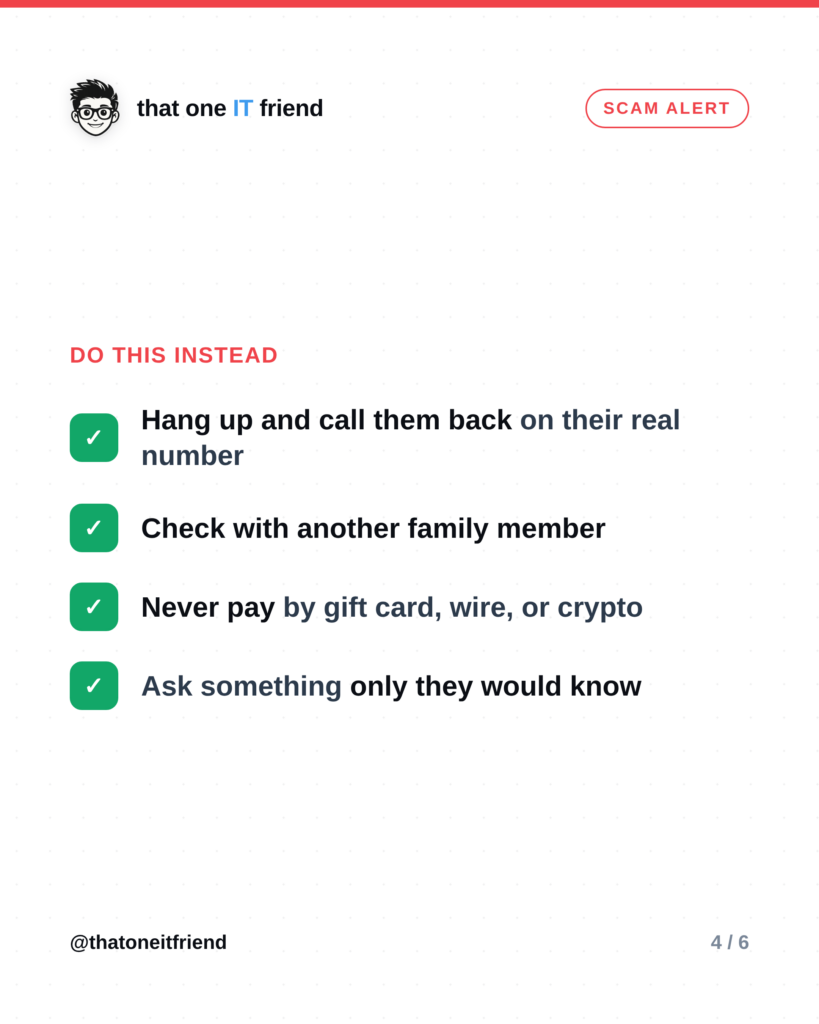
- Hang up and call them back on the number you already have for them. If they’re fine, the “emergency” was fake.
- Check with another family member before you do anything.
- Never pay with gift cards, wire transfers, or crypto, no real emergency needs those.
- Ask a question only the real person would know (not something posted online).
The one move that beats it: a family code word
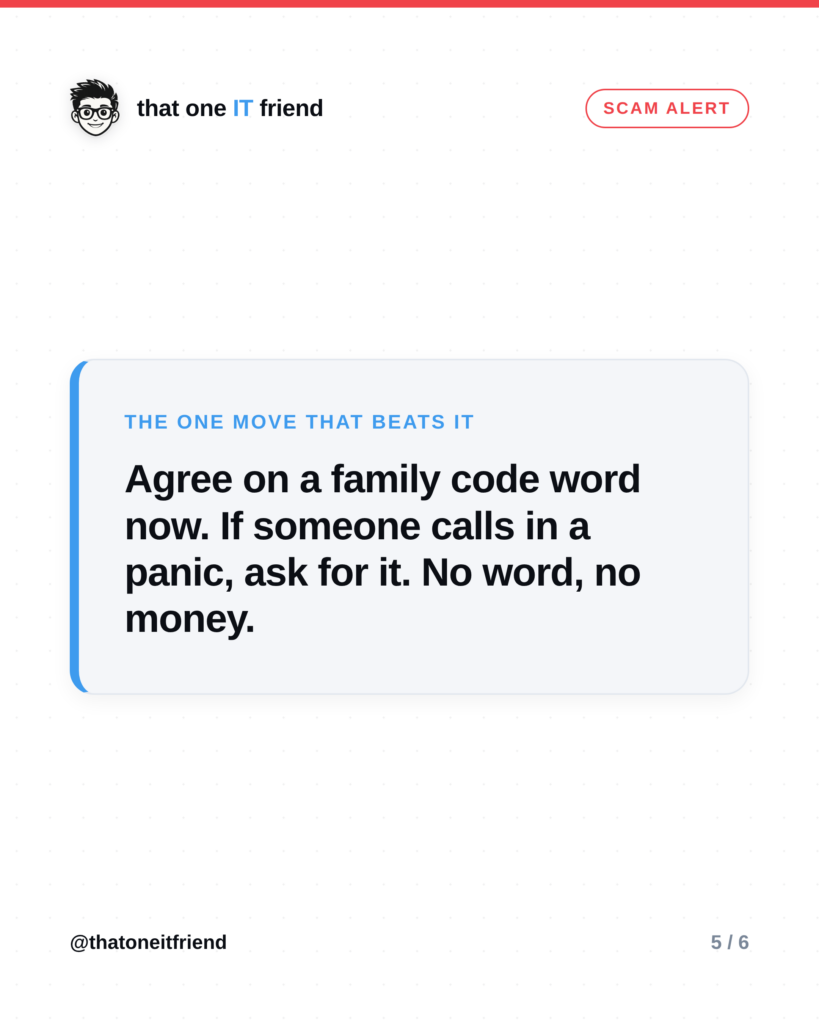
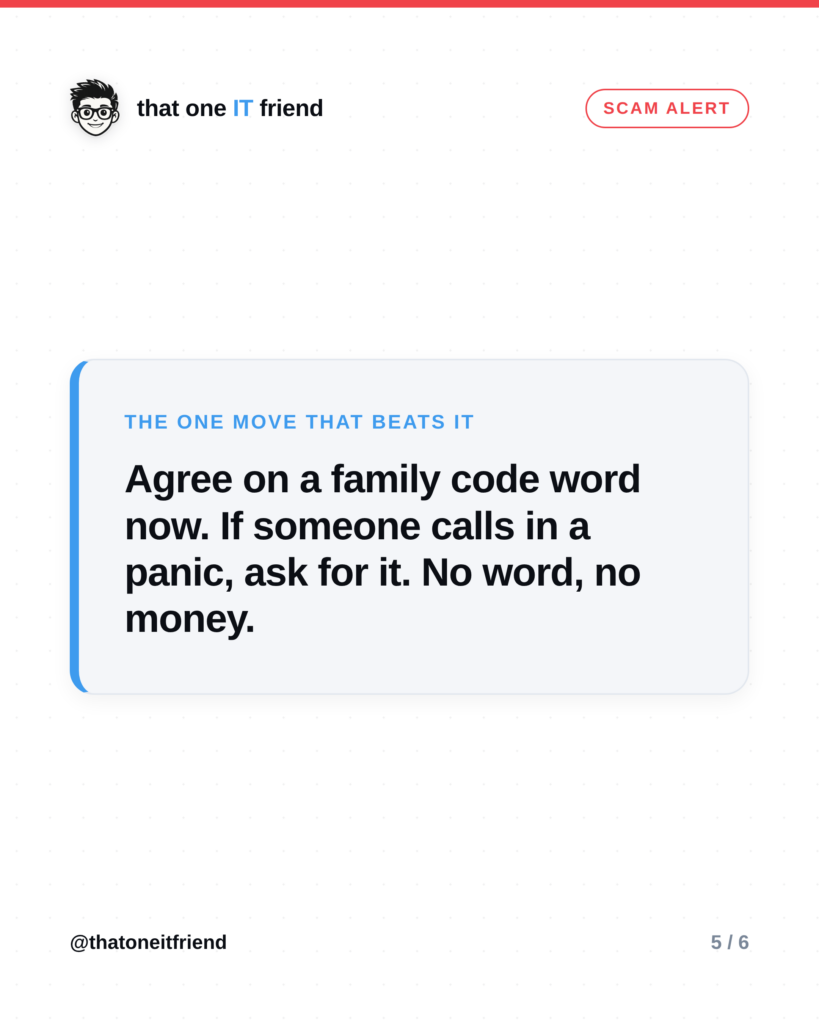
 Agree on a family code word now, before you ever need it. Pick a random word everyone remembers. If someone calls claiming to be family in a crisis, ask for the word. No word, no money. It’s simple, it’s free, and it defeats even a perfect voice clone. Set one up with your family this week and tell the older folks especially, they’re the top target.
Frequently asked questions
Can scammers really copy a voice that well?
Yes. Current tools need only a few seconds of clear audio to produce a convincing clone. That’s why hearing a familiar voice is no longer proof of who’s calling.
How do they get my family member’s voice?
Usually from public sources, social media videos, voicemail greetings, podcasts, anything with them talking. It’s another reason to keep personal accounts private.
What if I already sent money?
Contact your bank or the payment service immediately, gift card issuer, wire service, or crypto exchange, and report it to the FTC at ReportFraud.ftc.gov and to local police. Acting fast gives you the best shot at recovery.
This post covers a scam and financial fraud. If it hits close to home, the FTC’s guidance at consumer.ftc.gov has more, and if you or someone you know is being pressured or targeted, it’s worth looping in a trusted family member or your bank.
Prefer the visual version?
Swipe through, then save it or send it to someone who needs it.
Every week I break down one scam to dodge, one genuinely useful AI trick, and one 30-second tech fix, in plain English. Follow @thatoneitfriend on Instagram, TikTok, and Facebook, or get the weekly rundown by email at thatoneitfriend.com.