
Short answer: if anyone tells you to move your money to keep it safe, it’s a scam, and it does not matter how much they know about you. Real fraud departments freeze cards and reverse charges. They do not ask you to wire, Zelle, or withdraw anything. The FTC puts it about as plainly as a federal agency ever puts anything: “Never move or transfer your money to ‘protect it.'”
How the bank fraud call actually goes
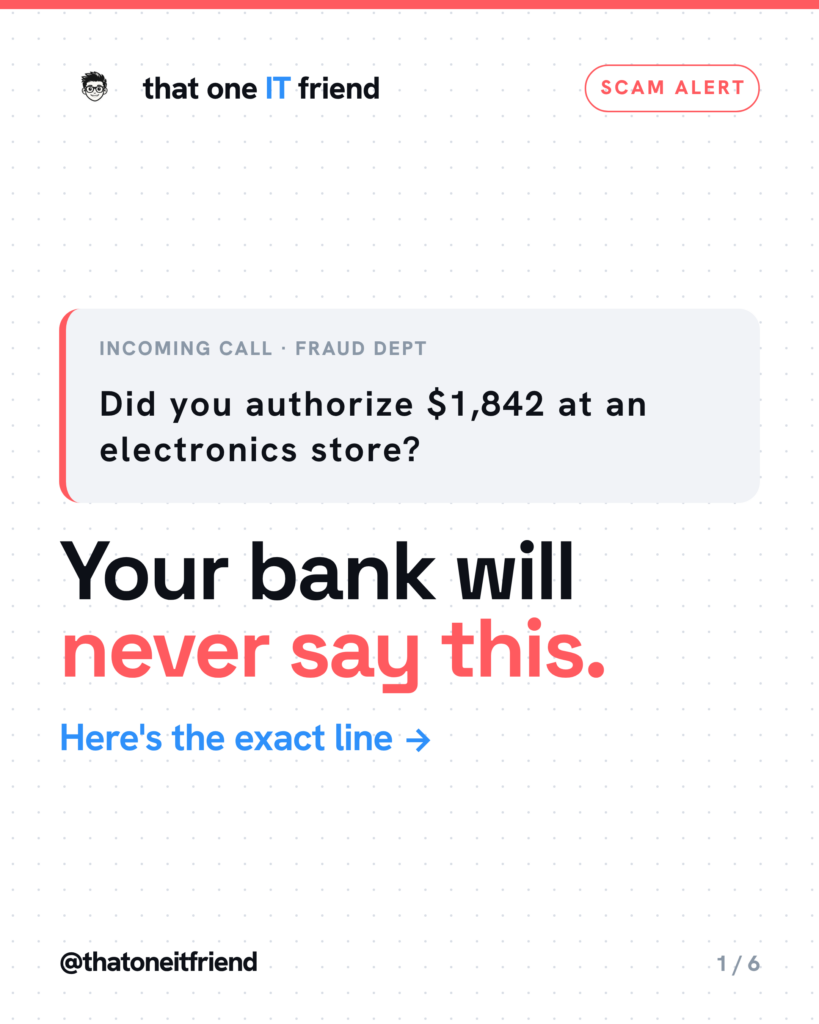
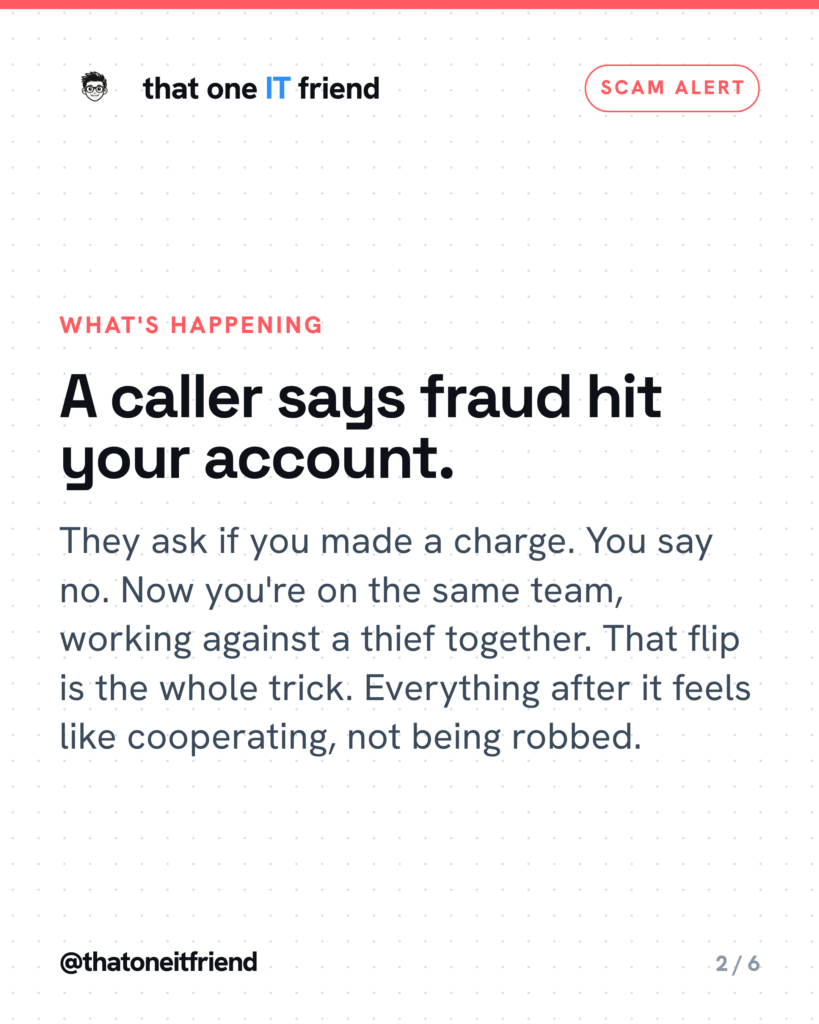
The phone rings and the screen says your bank. A calm person from the fraud department asks whether you just authorized a charge, usually something specific and alarming. You didn’t. Good, they say, we stopped it in time. And right there, in about eight seconds, the whole shape of the call changes. You are no longer talking to a stranger who wants something from you. You are talking to an ally, and the two of you now have a common enemy.
Everything that follows rides on that flip. The FBI’s Internet Crime Complaint Center described the pattern again in a November 2025 alert, where criminals make contact “via fraudulent text messages, calls, or emails,” claim there are fraudulent transactions, and ask for login credentials including the one-time passcode. In an earlier and even nastier version, the “phantom hacker” scam, IC3 describes the caller telling victims they “must move their money to a ‘safe’ third-party account,” then directing the transfer “via a wire transfer, cash, or cryptocurrency.”
Why smart people fall for it
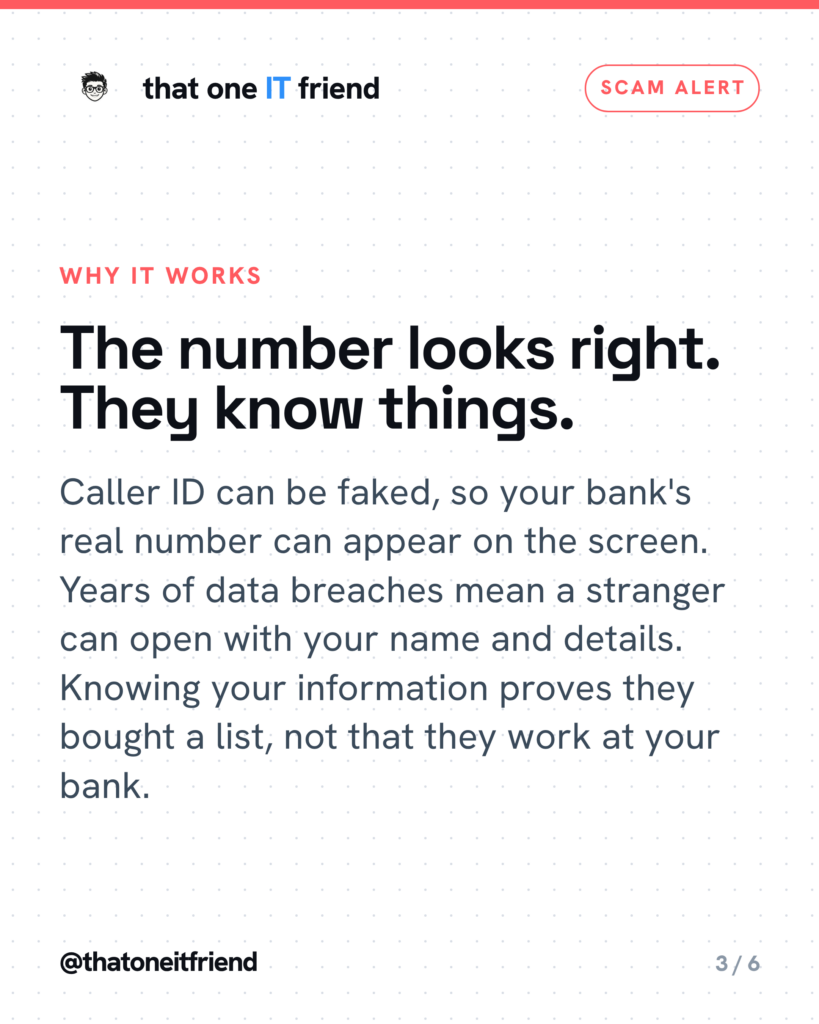
Two things do most of the work. The first is that caller ID is a suggestion, not proof. Wells Fargo says it outright on its own fraud page: “Scammers can spoof caller ID.” A scam text can even land inside the same message thread as your bank’s real texts, sitting under a legitimate alert from last month.
The second is that they already know things about you. Chase explains why in one sentence on its security site: after years of breaches, “a tremendous amount of data is available for scammers to use to convince you that they must be who they say they are.” Your name, your address, sometimes an account detail. It feels like proof. It is a purchase.
Then comes urgency. Chase again: scammers “create a crisis scenario involving your account to fabricate a sense of urgency and pressure you into acting quickly.” They keep you on the line, because the moment you hang up and dial the number on your card, the whole thing collapses.
The three asks, and why each one is fatal
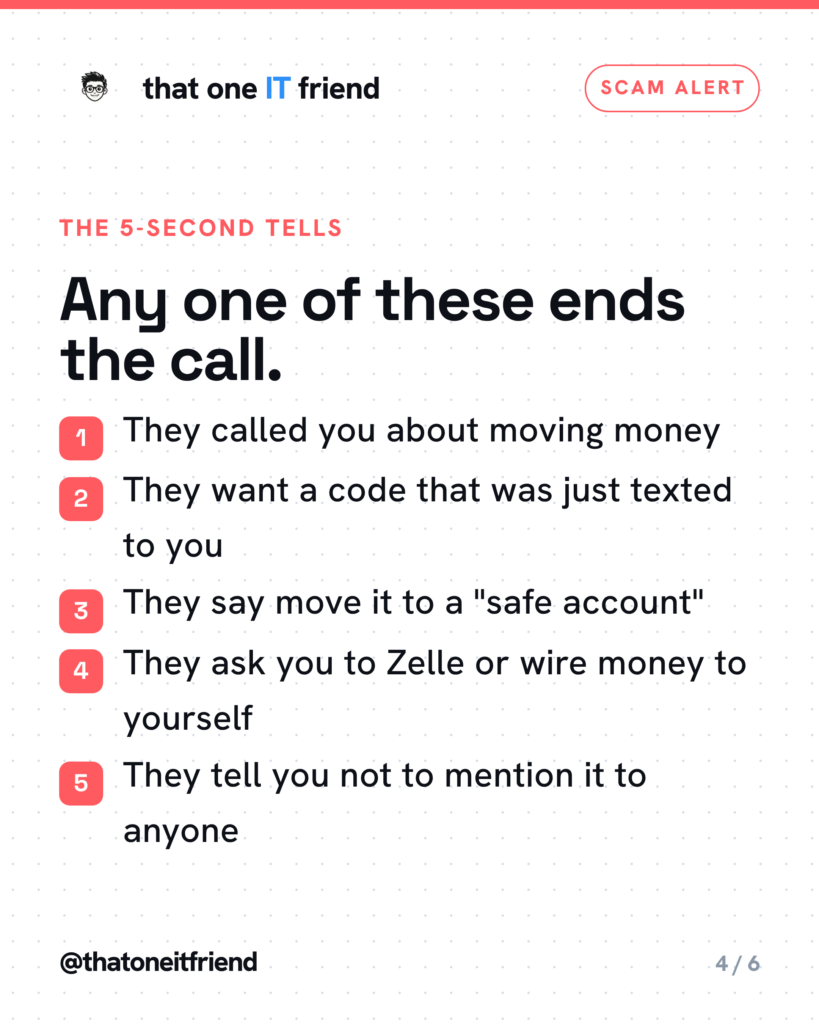
- Move it to a safe account. There is no such thing. Your money is already in the safest place it can be, which is your account, and no bank has ever needed you to relocate it.
- Send it to yourself with Zelle. This one gets people, because it sounds harmless. Wells Fargo states the bank “will never ask you to move or send money to anyone, including yourself.” Chase: “We will never ask you to send money to yourself.”
- Read back the code. A six-digit code arrives and the caller asks you to confirm it. That code is the scammer logging in right now. The FTC: “No caller — especially someone from your bank or investment company’s fraud department — will ever ask for the verification code. That’s always a scam.”
The part nobody tells you until it's too late
People assume a bank will make them whole the way a credit card company does with a stolen card. The FTC says otherwise, and this is the sentence worth reading twice: “Bank accounts have different (and fewer) protections than credit cards. If you are scammed into moving your money out of your account, you won’t be protected. And you probably won’t get that money back.” Because you authorized the transfer yourself, it is not treated as an unauthorized transaction. That is precisely why scammers steer you toward wires and Zelle instead of asking for a card number.
The scale is not small. In June 2026 the FTC reported that people lost about $16 billion to fraud in 2025, the highest on record and up roughly 25% over 2024. Business impersonators accounted for close to $1 billion of it, and bank impersonators were the biggest single slice of that category.
What to do instead
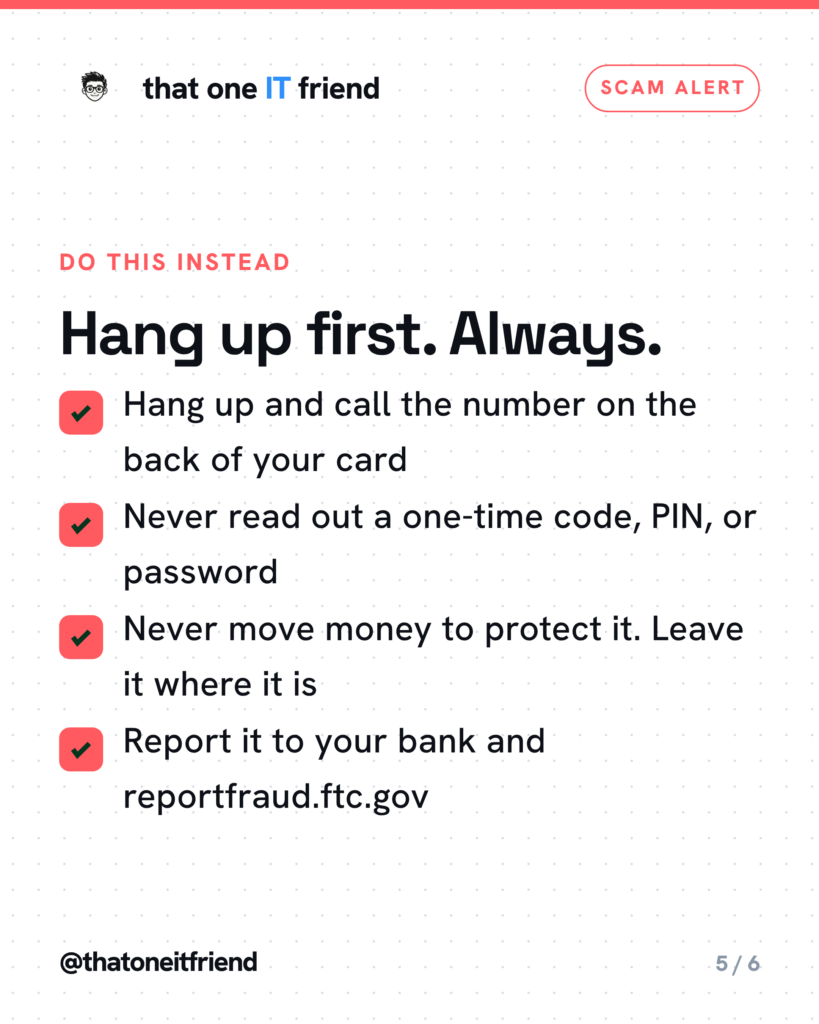
- Hang up. Not “ask a few questions first” — hang up. Then call the number printed on the back of your card or on your statement, never a number the caller gave you.
- Never read a one-time code out loud, to anyone, for any reason. Nobody legitimate will ask.
- If you already moved money, call your bank immediately and report it at reportfraud.ftc.gov. Speed occasionally allows a recall.
- Tell somebody. Scammers ask for secrecy because a second person in the room ends the call.
The one rule to remember
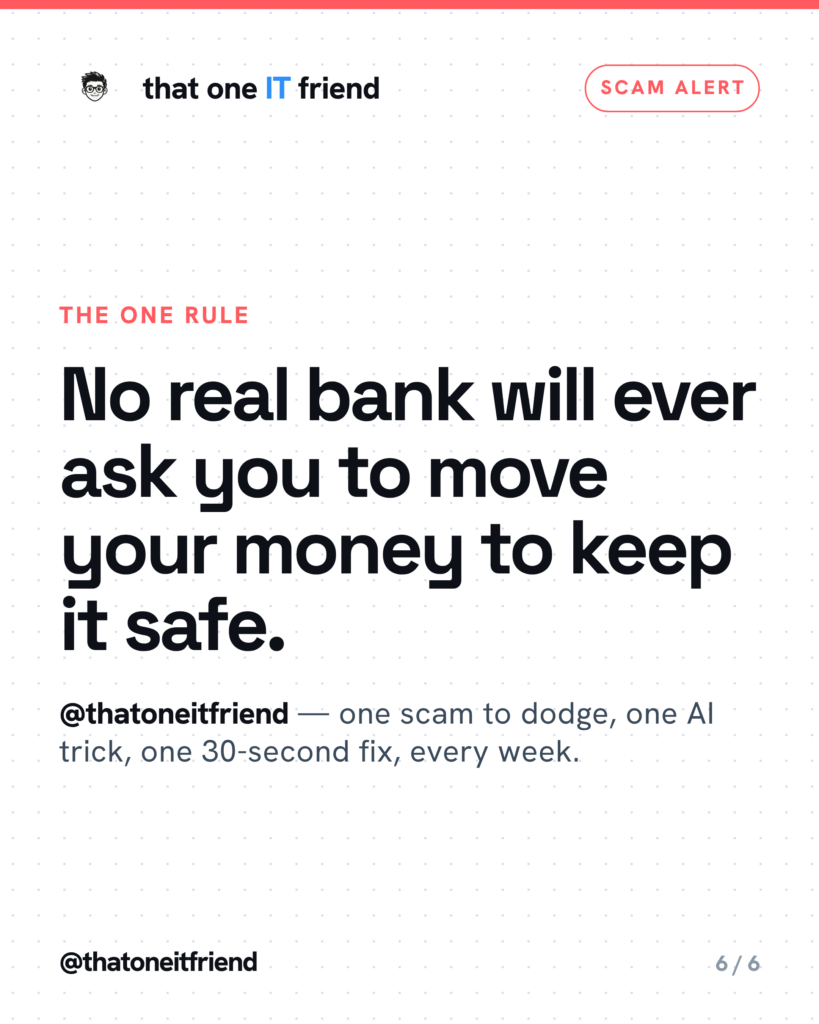
No real bank will ever ask you to move your money to keep it safe. Not to a safe account, not to yourself, not to a crypto wallet, not to a courier at your door. If that sentence comes out of the phone, you already know what you’re talking to, and you can hang up mid-word without being rude.
Frequently asked questions
The number on my phone said it was my bank. How can that be fake?
Phone numbers are easy to forge. Wells Fargo’s own fraud page says “Scammers can spoof caller ID,” and Chase says the same thing. Treat the number on your screen as a claim, not as identification. A scam text can even appear in the same thread as your bank’s genuine messages.
They knew my name and details about my account. Doesn't that prove it's really my bank?
No. Chase explains that after years of data breaches, “a tremendous amount of data is available for scammers to use to convince you that they must be who they say they are.” Knowing your details proves someone has a database, not a bank badge.
What's the harm in reading back a code? My bank sent it.
That code is the key to your account, and reading it aloud hands it over. The FTC is unambiguous that no real fraud department will ever ask for it. The FBI’s November 2025 alert describes what happens next: the criminal logs in with the code and starts a password reset, which locks you out for good.
If I get tricked, won't the bank refund me like a stolen credit card?
Probably not. The FTC states that bank accounts have fewer protections than credit cards, and that if you are scammed into moving money out of your account you won’t be protected and probably won’t get it back. Report it immediately anyway, because speed sometimes matters, but don’t count on a refund.
Every week I break down one scam to dodge, one genuinely useful AI trick, and one 30-second tech fix, in plain English. Follow @thatoneitfriend on Instagram, TikTok, and Facebook, or get the weekly rundown by email at thatoneitfriend.com.