
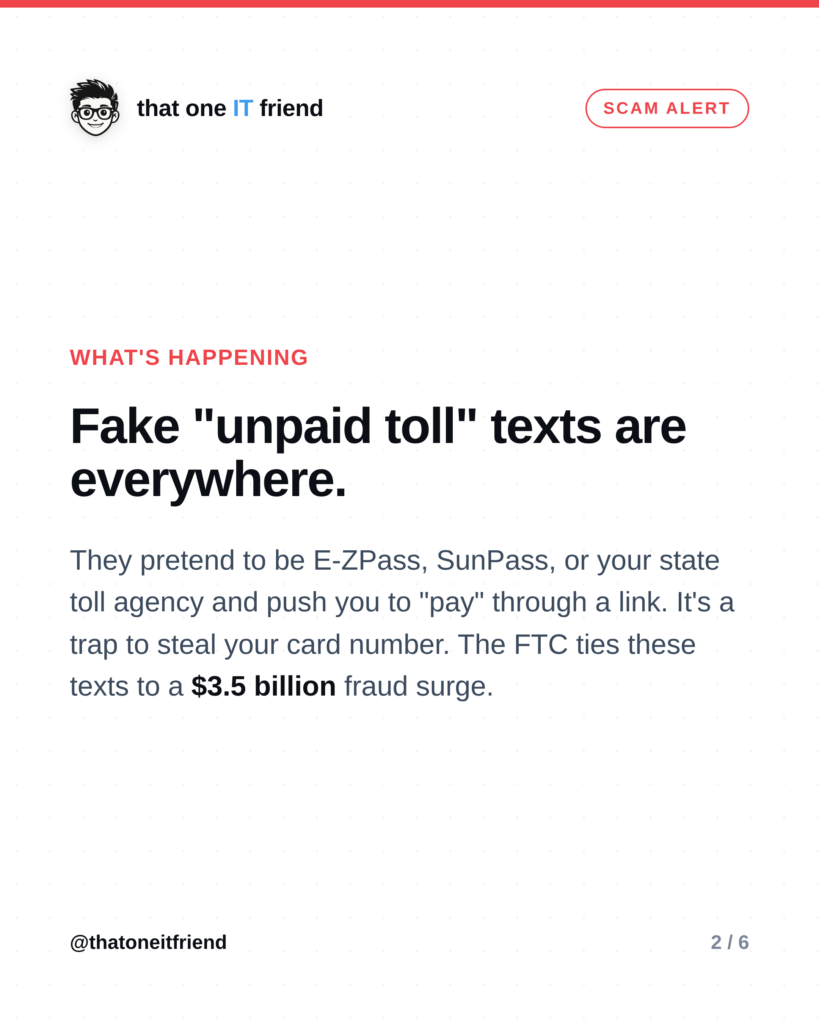
Short answer: yes, that “unpaid toll” text is a scam. Real toll agencies like E-ZPass, SunPass, and state turnpikes don’t text you a link to pay. The message is a trap designed to steal your card number, and the Federal Trade Commission has tied these texts to a multi-billion-dollar wave of fraud. Here’s how to recognize one in about five seconds and exactly what to do next.
What the unpaid toll text scam looks like
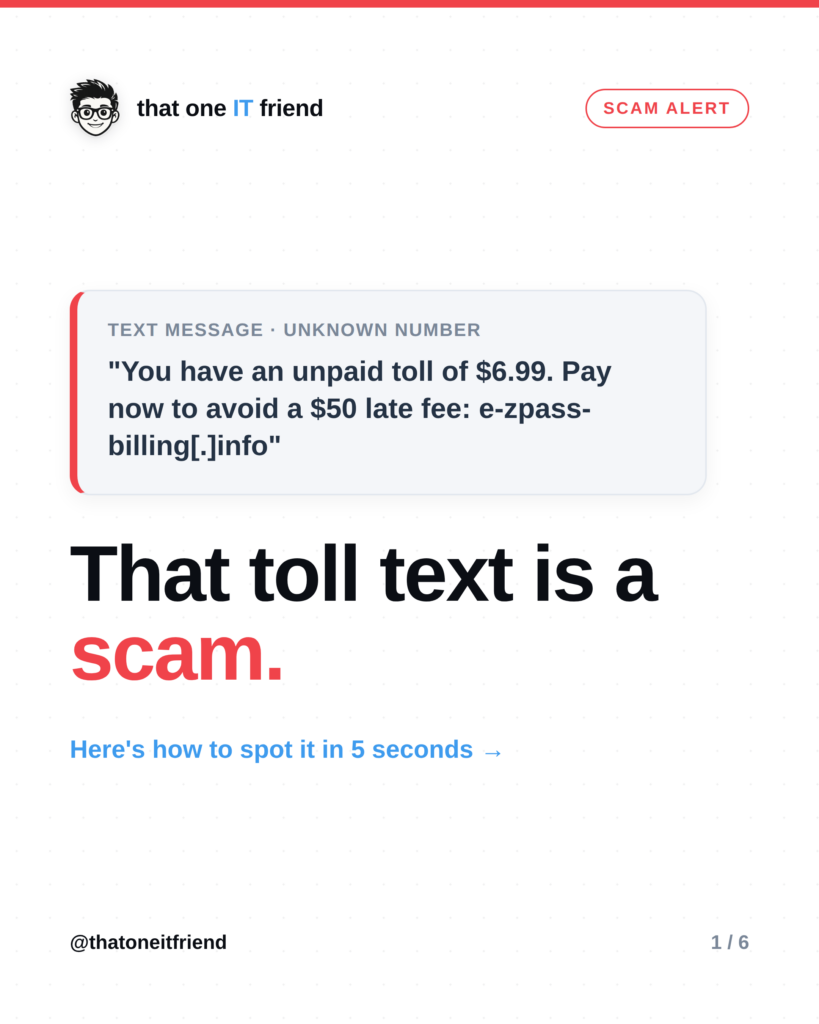
It lands as a text from a number or email address you don’t recognize, and it usually reads something like this:
“You have an unpaid toll of $6.99. Pay now to avoid a $50 late fee: e-zpass-billing[.]info”
 The amount is always small and the deadline is always urgent. That combination is the whole trick: it’s cheap enough that you might just pay to make it go away, and scary enough that you don’t stop to think. Tap the link and you land on a page that looks like your toll authority, asking for your card details. Enter them, and you’ve handed your information straight to a scammer.
Why this scam works so well
Almost everyone drives through a toll at some point, so the message feels plausible. Most people can’t remember every toll they’ve paid, so a $6.99 “balance” doesn’t set off alarm bells. And because the fake fee is so small, paying feels easier than fighting it. Scammers send these by the millions, and they only need a tiny fraction of people to tap the link to make it worth their while.
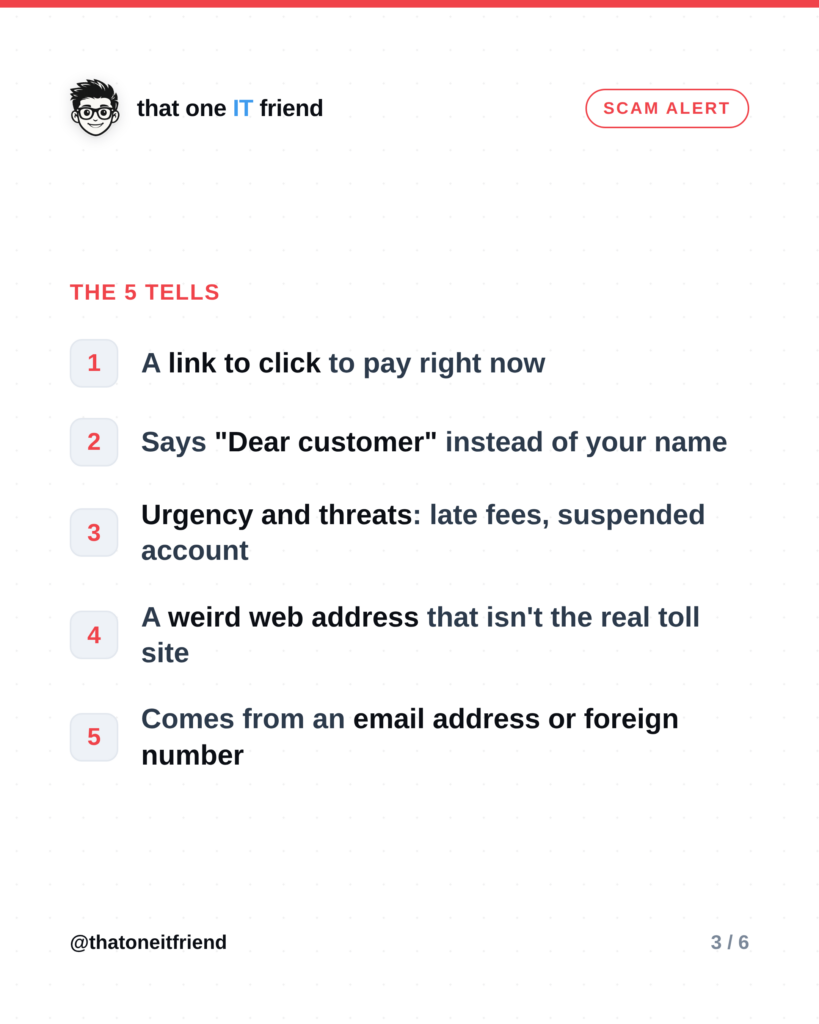
The 5 tells that give it away
You don’t need to be technical to catch one. Look for these:
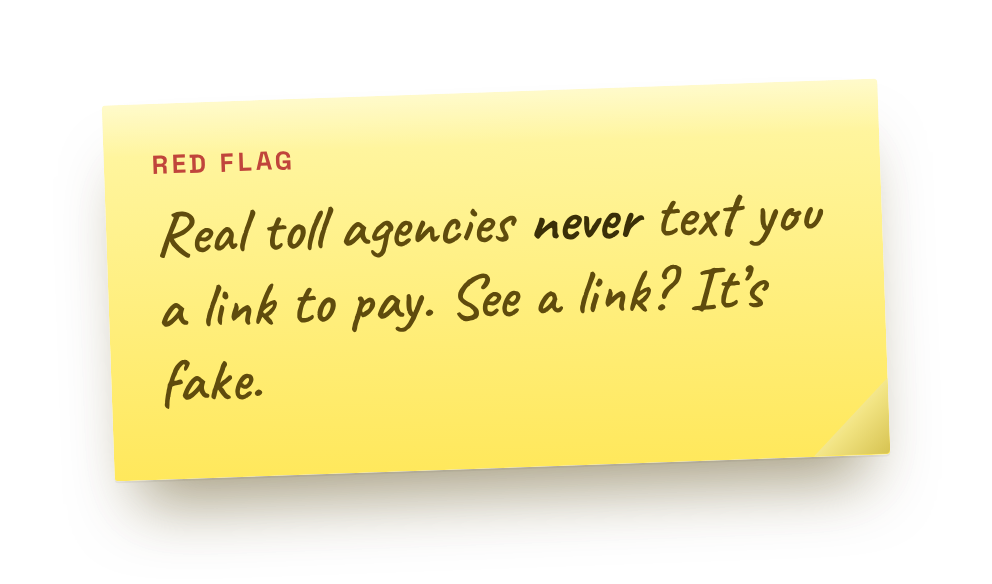
- A link to pay right now. Legitimate toll agencies don’t text payment links.
- “Dear customer” instead of your name. They don’t actually know who you are.
- Urgency and threats. Late fees, suspended accounts, “act within 12 hours.”
- A web address that isn’t the real toll site. Odd spellings, extra words, foreign endings like .info or .xin.
- It comes from an email address or an overseas number. Real agencies use short codes, not a Gmail account.
What to do if you get one
Keep it simple:
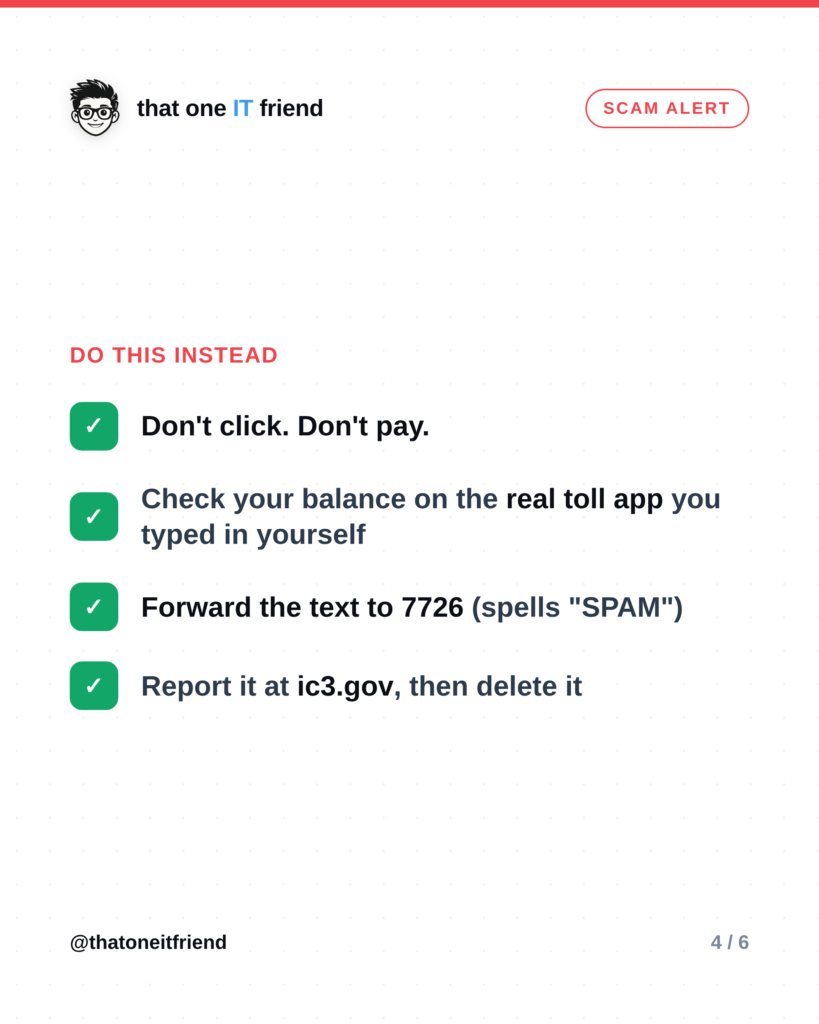
- Don’t click, and don’t pay. Nothing good is on the other side of that link.
- Check your real balance yourself. Open your toll agency’s official app or type its website in by hand, never through the text.
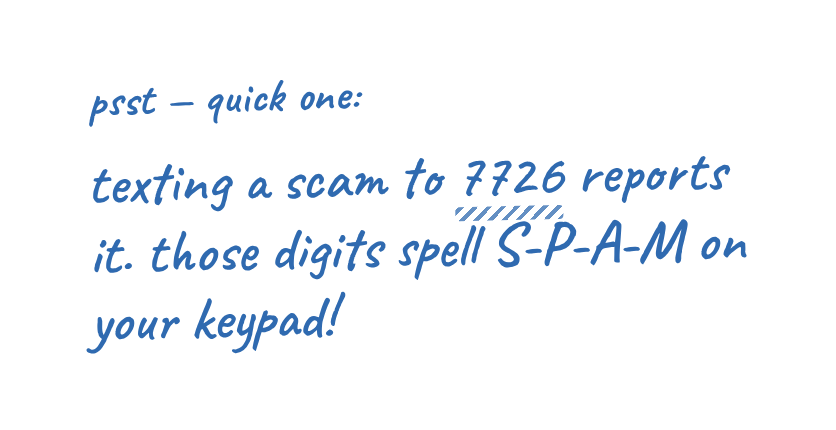
- Report it. Forward the message to 7726 (that spells “SPAM”), which flags it with your carrier, and file a report at ic3.gov.
- Delete it. Once it’s reported, get it off your phone.
If you did tap the link and entered your card, call your bank right away, freeze or replace the card, and watch your statements. For more, the FCC’s guidance on toll scam texts and the FTC consumer site are worth a look.
The one rule to remember
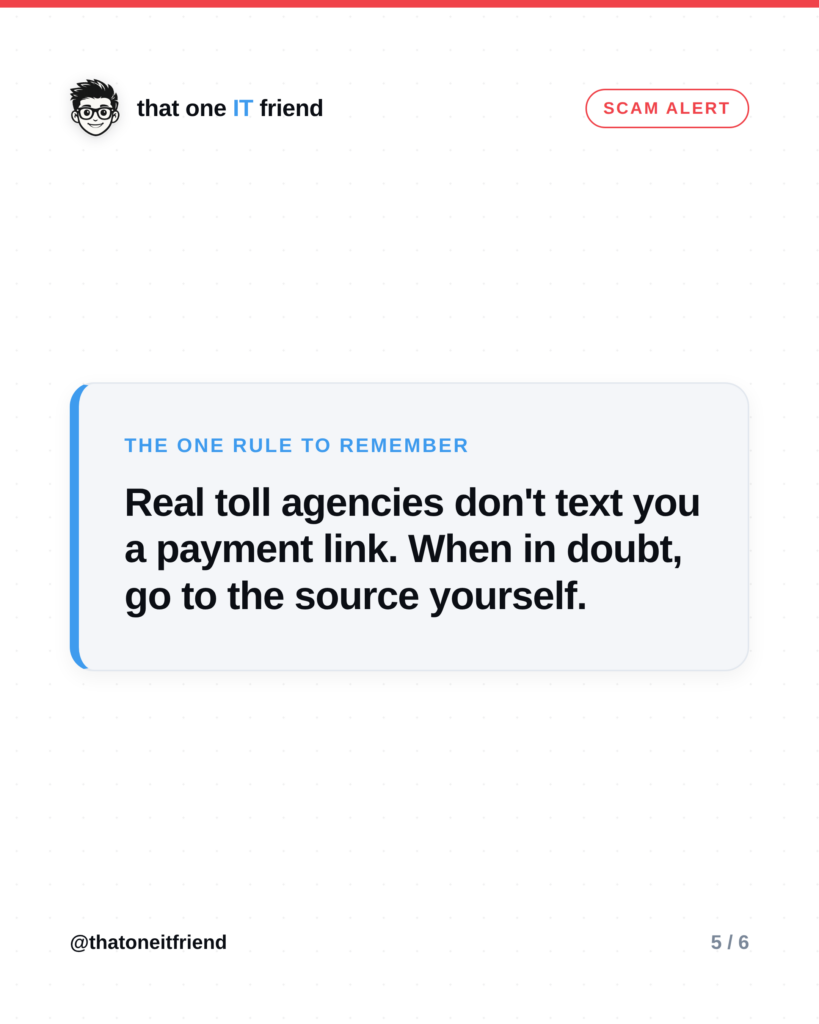
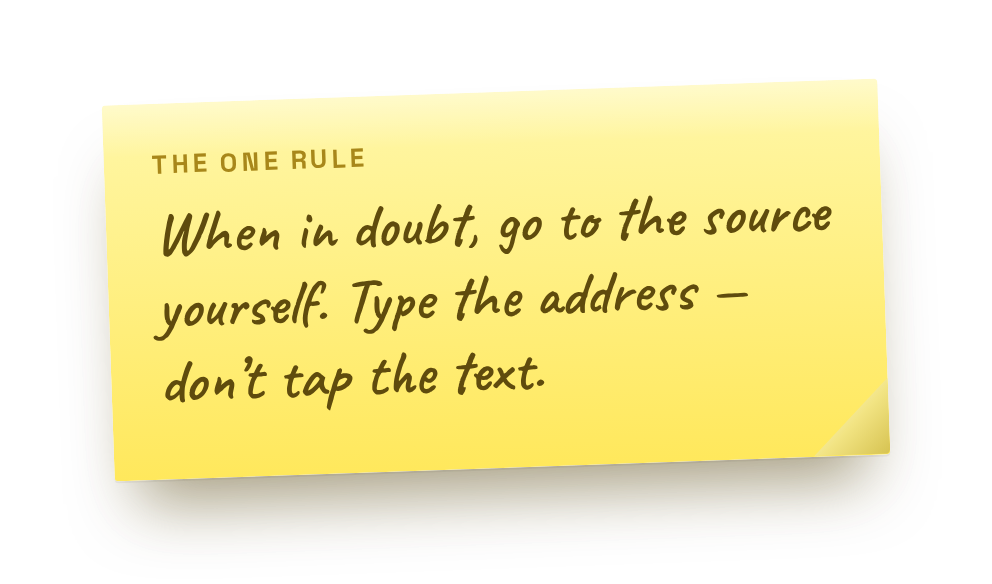 Real toll agencies don’t text you a payment link. When in doubt, go to the source yourself. If you remember nothing else, remember that. It kills this scam and a dozen others just like it.
Frequently asked questions
Is the E-ZPass text about an unpaid toll real?
No. E-ZPass and other toll agencies don’t send texts with links to pay a balance. If you’re worried you actually owe a toll, log into your account through the official app or website you type in yourself.
What happens if I clicked the link but didn’t enter anything?
Tapping the link alone is low-risk on a modern phone. Don’t enter any information, close the page, and delete the text. If you’re cautious, keep an eye out for more scam messages, since responding can flag your number as active.
What if I already paid?
Call your bank or card issuer immediately, report the card as compromised, and ask about a replacement. Then report the scam at ic3.gov so it’s on record.
Prefer the visual version?
Swipe through, then save it or send it to someone who needs it.
Every week I break down one scam to dodge, one genuinely useful AI trick, and one 30-second tech fix, in plain English. Follow @thatoneitfriend on Instagram, TikTok, and Facebook, or get the weekly rundown by email at thatoneitfriend.com.